 Touchline Sport
There probably aren’t many professional football clubs running on a €2.9 million budget where selling draw tickets remains genuinely important to the finances.
At Sligo Rovers, it is.
The Annual Draw raised a record €153,360 in 2025. The Friends of Sligo Rovers 500 Club contributed another €171,700 and has now put €2.19 million into the club across 23 years. At April’s AGM, the scheme had 743 members.
This isn’t some novelty fundraiser brought out when the transfer budget starts looking a bit miserable. It is part of how Sligo Rovers operates.
And lately, it has had to work very hard.
Exact income for 2025 was €2,720,008, up 13 per cent. Expenditure increased by 11 per cent and Rovers finished the year with a €45,000 deficit, a sizeable improvement on the €299,000 loss in 2023.
The less comfortable bit sat underneath those figures. The club has relied in recent years on a bank overdraft, loans from committee members and payment agreements with key suppliers.
Chairman Tommy Higgins didn’t exactly arrive at the AGM armed with party hats.
“There are headwinds ahead.”
Later, discussing the wider league, he was clearer still:
“The League of Ireland is now a different place. Clubs have adopted new commercial models and are benefiting from significant external investment.”
Then came the line that really explains why Sligo are having this conversation now.
“The gap is widening every year.”
The Model Has Actually Won Things
It would be easy to talk about supporter ownership as though it belongs beside old programmes, wooden turnstiles and people telling you football was better when everyone kicked lumps out of each other. Sligo’s version comes with silverware.
Founded in 1928, Rovers joined the League of Ireland in 1934 and won their first title in only their third league season. They started 1936/37 with 11 straight victories and became the first club from outside Leinster to win the championship.
The second title took another 40 years.
On Easter Sunday in 1977, Sligo beat Shamrock Rovers 3-1 at the Showgrounds to clinch it, with supporters spilling onto the pitch afterwards. European football followed against Red Star Belgrade.
The FAI Cup required even more patience. Sligo lost finals in 1939, 1940, 1970, 1978 and 1981 before finally winning one at the sixth attempt in 1983, beating Bohemians 2-1 at Dalymount Park.
Willie McStay’s side then delivered a First Division, First Division Shield and FAI Cup treble in 1993/94.
And then came the period plenty of modern supporters grew up with. Three FAI Cups between 2010 and 2013, the 2010 League Cup, the 2012 Premier Division title and the 2014 Setanta Sports Cup.
So nobody around the Showgrounds needs a lecture about what supporter ownership can achieve.
It has already done the hard bit.
It won things.
The Bills Have Started Winning Too
The issue is what it now costs to keep doing it.
Season-ticket income rose from €177,064 to €230,556 last year. Streaming income nearly doubled, from €13,904 to €27,730. Player-loan income reached €30,078, while UEFA solidarity funding increased by almost €300,000.
All positive.
Then the bills arrived.
Total fundraising fell from €532,466 to €468,804. Player wages and salaries increased by almost €150,000, taking the figure to just under €1 million. Rent rose from €55,969 to €76,632. Referee expenses climbed to €57,297.
Even overnight accommodation became more expensive because Cork City and Waterford were back in the Premier Division.
Football finance can sound very glamorous until somebody explains that part of your rising cost base is another night in a hotel before playing away in Cork.
Domestic gate receipts also fell to €463,941, down just under €95,000, though that needs context. Sligo hosted Celtic and Everton friendlies in 2024 and had nothing comparable last year. It would be unfair to look at the fall and conclude supporters suddenly stopped showing up.
The more interesting comparison is what happens elsewhere when money is needed quickly.
Dermot Desmond’s €2 million investment in Shamrock Rovers for a 25 per cent stake helped take shareholders’ funds from a near €1.3 million deficit to a €1.34 million surplus. Cash went from less than €900 to almost €2 million.
That is the bit supporter fundraising struggles to recreate.
Speed.
Sometimes Supporter Ownership Needs Outside Money
None of this means supporter ownership doesn’t work.
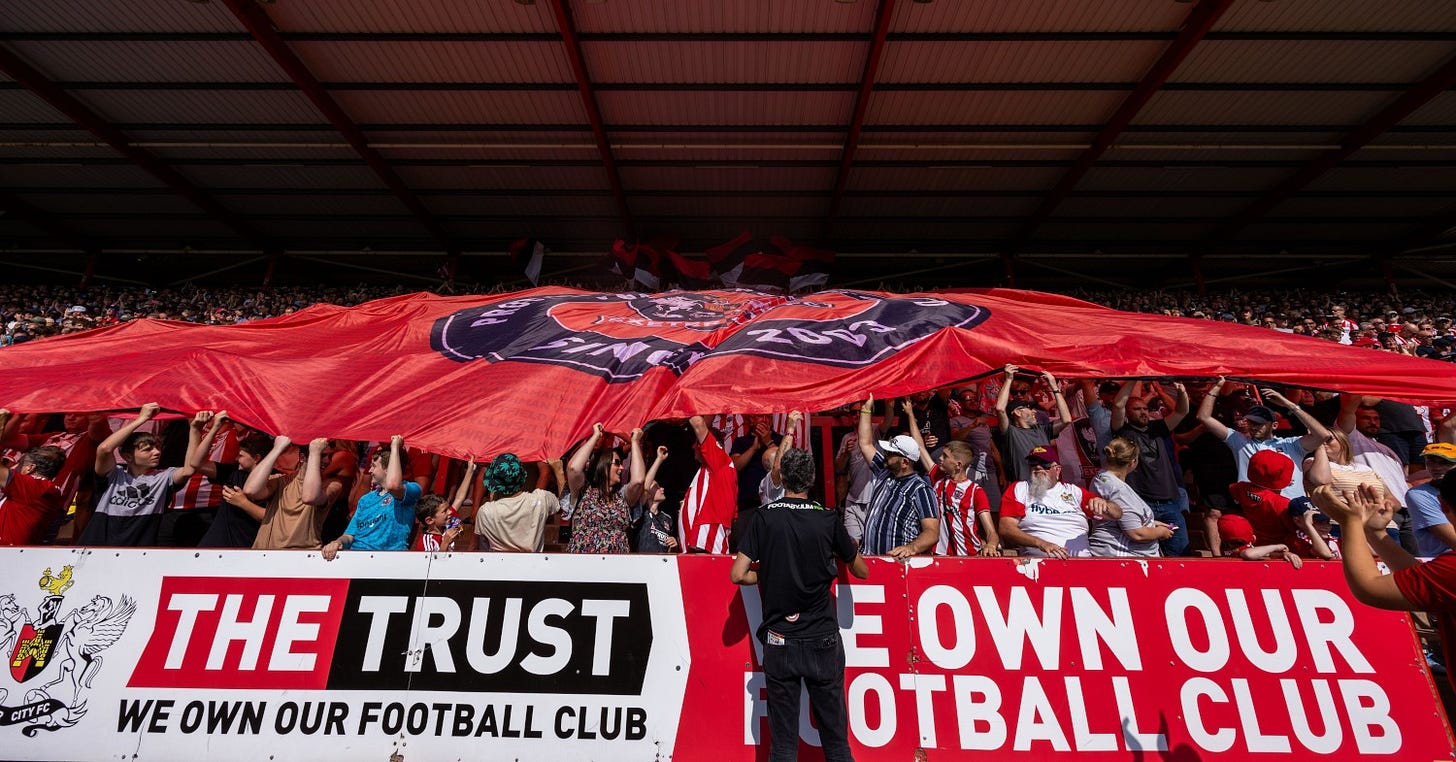
Exeter City’s Supporters’ Trust owns 57.9 per cent of the club, has around 5,700 members and has contributed roughly £2 million directly since 2000.
But even Exeter show the limits. Their Trust contribution is increasing from £112,000 to £240,000, while the club also required more than £600,000 in Trust loans during 2025/26.
At that point, the supporters are basically being asked to become the wealthy owner, only there are 5,700 of them.
AFC Wimbledon found something similar when looking around League Two. The average club at that level lost £2.17 million in 2023/24, compared with £370,000 four years earlier. League One clubs averaged losses of £5.2 million.
Fan ownership isn’t necessarily the financial problem.
Sometimes football itself is.
Portsmouth offer another useful example. Supporters rescued the club, stabilised it and watched Pompey win League Two under fan ownership. Then in 2017, 1,825 supporters voted in favour of selling, compared with 447 against, when Michael Eisner offered £5.67 million to buy the club plus another £10 million in equity investment.
The people who saved Portsmouth eventually decided outside money might help take it somewhere else.
There is no tidy moral there.
Which is probably why Sligo should pay attention.
Changing Sligo Without Selling Sligo
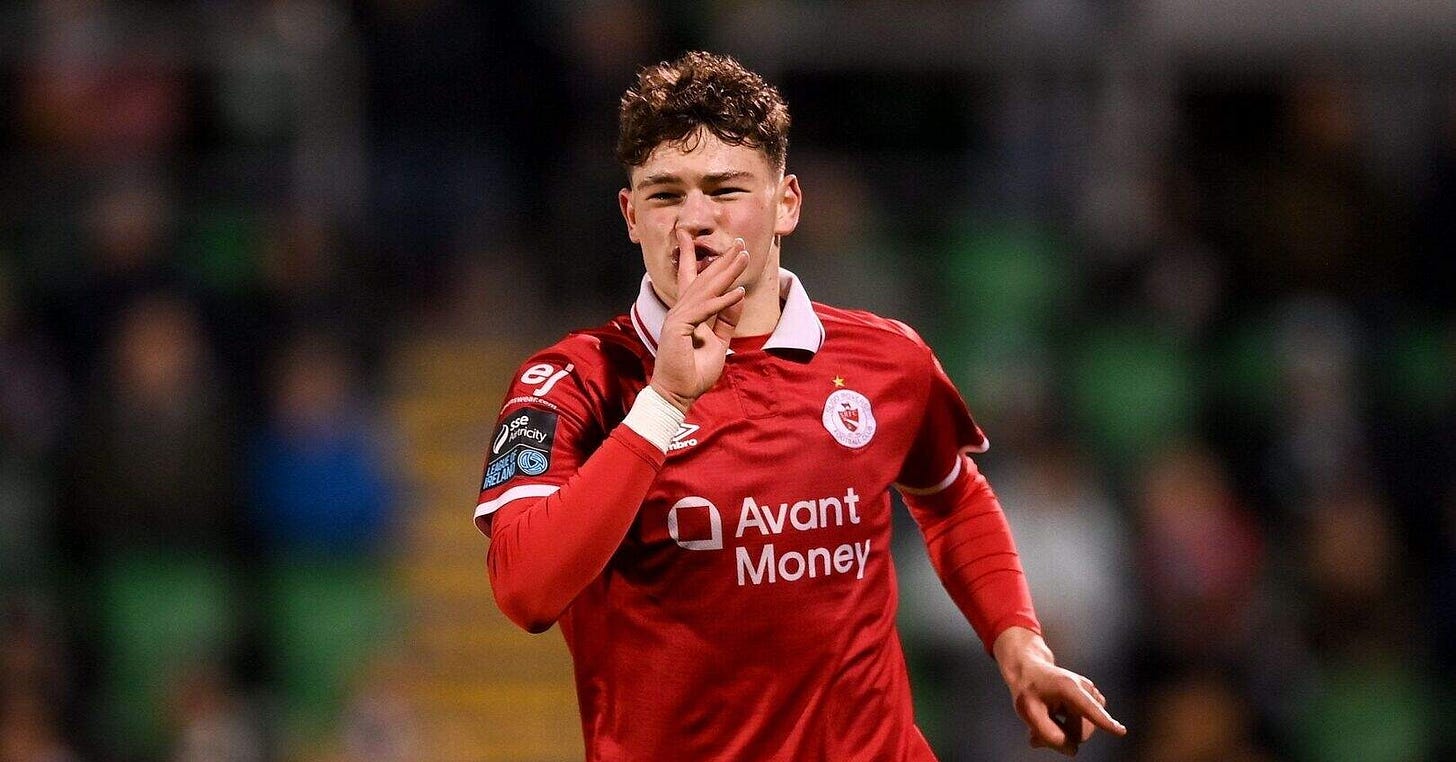
Rovers are not proposing anything close to that.
The Society wants to establish a separate company to run the men’s team, women’s team and academy. Initially, it would own 100 per cent of that company.
The Society would keep the Showgrounds lease, which runs until 2064, along with the club identity and public funding. Any future investor would buy into the football company, with the intention that supporter control remains.
There isn’t even an investor lined up.
Up the road, Finn Harps are confronting the same problem from another angle. Their proposed investor has committed €1.6 million towards the new stadium and another €213,000 for the land beneath it.
That is €1.813 million from one source.
Sligo would need to repeat their record €153,360 Annual Draw for nearly 12 years to raise the same amount.
And there is the awkward bit.
Supporters can provide loyalty, patience, governance, volunteer hours and an extraordinary amount of money.
What they struggle to provide is €1.8 million on Tuesday morning.
Sligo Rovers are not deciding whether supporter ownership has failed. Nearly 100 years of history would make that a fairly daft conclusion.
They are deciding whether keeping the club in supporter hands now means changing what supporter ownership looks like.
If this one landed, the newsletter’s where the rest of it lives — two or three pieces a week, no noise.
Subscribe