 Touchline Sport
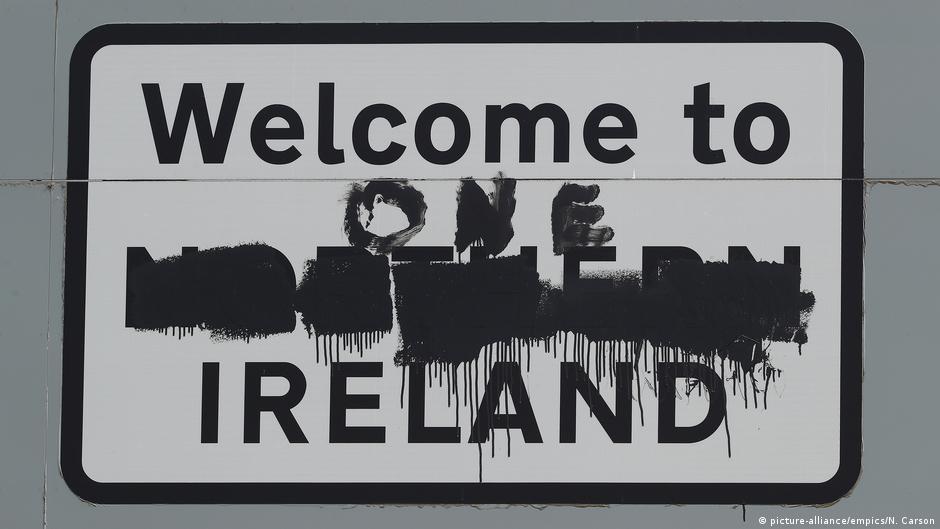
Kerry County Council wants the FAI and Irish FA around the same table to discuss one of those Irish football arguments that never really goes away: should the island still have two international teams?
The motion was brought by Sinn Féin councillor Robert Brosnan at the council’s latest meeting and seconded by party colleague Paul Daly. The council will now write to both associations, along with the relevant government departments and ministers north and south of the border, asking for talks to begin “at the earliest opportunity”.
“That this Council calls on the FAI and the IFA to enter into discussions with the objective of establishing an inclusive all-Ireland international soccer team representing the entire island of Ireland.”
There is something fairly Irish about one of the counties furthest from the border being the one to formally drag the issue back onto the agenda.
Nobody needs to start picking an all-Ireland XI just yet, though. Kerry County Council is asking for a conversation, not announcing one, and there is no indication that either the FAI or IFA is considering giving up its existing national team.
Brosnan made part of his case through results, pointing to the Republic’s absence from the World Cup since 2002 and Northern Ireland’s since 1986. The split between the two teams goes back a lot further than either drought.
The IFA was founded in Belfast in 1880 and, for the first four decades, ran the game across the whole island. By the time the 1920s arrived, football people in Dublin had grown increasingly frustrated with how much of the power, selection and international football still revolved around Belfast.
Shelbourne then gave the split its tipping point. In 1921, Shels drew an Irish Cup semi-final with Glenavon in Belfast and expected the replay to come back to Dublin. The IFA decided Dublin was unsafe during the War of Independence and ordered the game back to Belfast instead. Shelbourne refused to go, were removed from the competition and, a few months later, the Leinster FA broke away. The FAI followed later that year.
Even then, things weren’t immediately as neat as two associations, two teams and one border between them. Both bodies continued selecting players from across Ireland and both used the name Ireland for a time before FIFA eventually forced a clearer separation.
The best example of how blurred things could still be came in 1973, when footballers from north and south lined out together at Lansdowne Road against world champions Brazil. John Giles, Derek Dougan, Pat Jennings and Martin O’Neill were among those involved, with the side officially playing as a “Shamrock Rovers XI” because even calling it an all-Ireland team was politically awkward.
Brazil won 4-3, but the match helped reopen talks between the FAI and IFA over whether the two associations could come closer together.
Those conversations continued into the 1970s, before the wider reality of the Troubles made the football divide even harder to ignore.
When Dundalk drew Linfield in the European Cup in 1979, Oriel Park became one of the ugliest examples of just how much baggage a cross-border fixture could carry. A tricolour was torn down and burned, stones were thrown, Gardaí and supporters were injured and 25 people were arrested. UEFA later fined Linfield and ordered the club to pay for damage caused at the ground.
That wasn’t just football hooliganism happening in a vacuum. These were clubs carrying different identities into a fixture while the conflict outside the turnstiles was still very real.
Irish football has moved a long way from Oriel Park in 1979, and cross-border fixtures since have shown that. But the history helps explain why “just have one team” has never been as simple as picking the best 23 players on the island.
Northern Ireland has built its own football history, support and identity over more than a century. So has the Republic. The split began through arguments over representation and control, but partition, the Troubles and generations of separate international football made it much deeper than an administrative row.
And yet the line has never been completely clean. Players represented both associations. An all-Ireland side faced Brazil. Clubs have crossed the border for cup competitions. Every so often, somebody looks at the structure inherited from 1921 and asks whether it still has to be permanent.
Kerry County Council cannot answer that question. It can only ask the FAI and IFA to sit down and talk about it.
There is a bit of irony in where the latest attempt has come from too. Kerry is roughly 280km by road from the border, about as far away from the dividing line in Irish football as you can get.
More than a century after that line was drawn, one of the counties furthest from it is asking whether we still need it at all.
If this one landed, the newsletter’s where the rest of it lives — two or three pieces a week, no noise.
Subscribe