 Touchline Sport
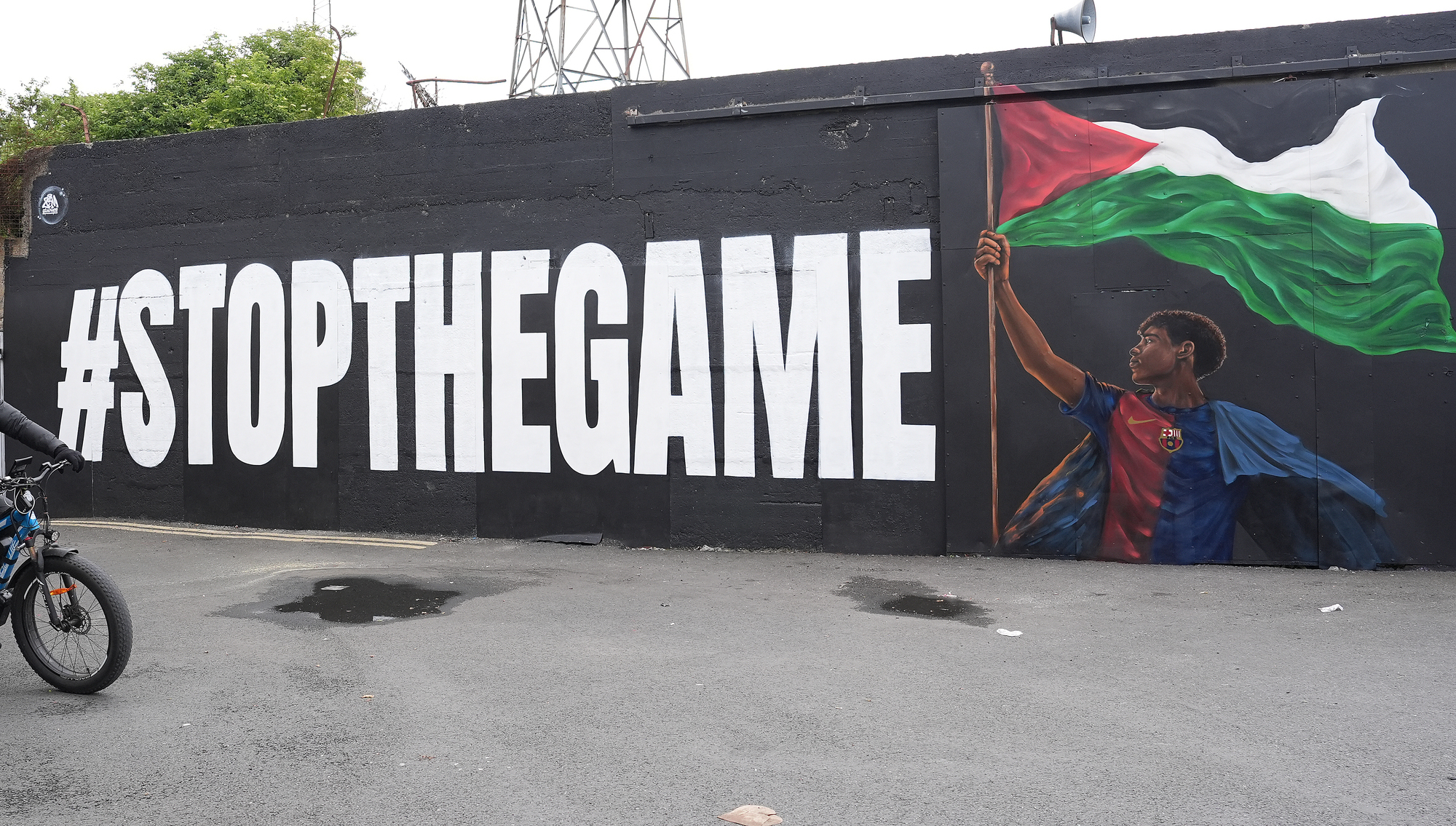
More than 160 Irish sportspeople have called directly on Republic of Ireland players to refuse to play Israel, just six days before the sides are due to meet in the Nations League.
The open letter, issued on Monday by Irish Sport for Palestine through its Stop The Game campaign, includes former Ireland international Louise Quinn, Olympian Ciara Mageean, former rugby international Tony Ward and footballers Savannah Kane and Luke Byrne. Names from GAA, boxing, basketball and para sport are also included, with Ireland due to face Israel in Debrecen on Sunday before the sides meet again in Serbia on 4 October.
The campaign has been trying to stop those fixtures for months, but until now much of the pressure has fallen on the FAI, UEFA and Government. With UEFA taking no action to remove Israel from the competition and the FAI committed to fulfilling its fixtures, Monday’s letter goes directly to the people who would actually have to take the pitch.
“Not playing the game would be the most sporting thing you could do.”
The letter asks the squad to “act collectively with conscience” and argues that the players can still refuse to participate regardless of the FAI’s decision. Its allegations concerning apartheid, war crimes and genocide are part of the campaign’s case for a boycott and are presented as claims made by the organisers.
Irish football has been wrestling with the issue since long before this international window. Last November, the FAI General Assembly voted 74–7, with two abstentions, to instruct the association to ask UEFA to suspend the Israel Football Association over alleged breaches of UEFA and FIFA statutes. FAI president Paul Cooke made clear immediately afterwards, however, that Ireland would still fulfil any UEFA fixture against Israel while the association remained eligible to compete.
That stopped being a hypothetical when Ireland and Israel were drawn together in Nations League Group B3. By July, delegates were back voting on the issue, this time backing the board’s decision to play the matches by 75 votes to 32, with three abstentions. The association argued that refusing to fulfil the games could carry serious sporting, disciplinary and financial consequences for Irish football.
Ireland therefore head into this international window having formally asked UEFA to suspend Israel from European football while preparing to face them twice in eight days. It isn’t exactly the sort of issue that disappears once the squad list is announced.
Hallgrímsson confirmed last week that he had spoken individually to his players about the fixtures and acknowledged that some felt “really uncomfortable”. Those conversations, he said, still ended with the players indicating that if Ireland were going to play, they wanted to remain with the group.
FAI director of football John Martin has argued that responsibility should sit above the squad rather than with individual players, echoing Séamus Coleman’s comments earlier this year that the issue should have been dealt with by governing bodies before it ever reached the team.
Monday’s letter puts that argument under fresh pressure by asking the players themselves to make a collective decision.
There has been no indication that anyone in Hallgrímsson’s 26-man squad plans to withdraw. Ireland first face Kosovo in Pristina on Thursday, travel to Debrecen for the Israel game three days later and host Austria at the Aviva Stadium on 1 October. The second Israel fixture follows in Bačka Topola on 4 October, with Ireland’s designated home game being played behind closed doors.
After months of FAI votes, UEFA correspondence and arguments over who should make the call, the issue has reached the dressing room. Ireland’s players have said they are prepared to play. More than 160 fellow Irish sportspeople are now asking them to reconsider.
If this one landed, the newsletter’s where the rest of it lives — two or three pieces a week, no noise.
Subscribe