 Touchline Sport

Most managers probably don’t enjoy seeing their centre-back standing ten yards from his own goal with an opposition striker charging towards him. Cesc Fàbregas seems quite happy with it.
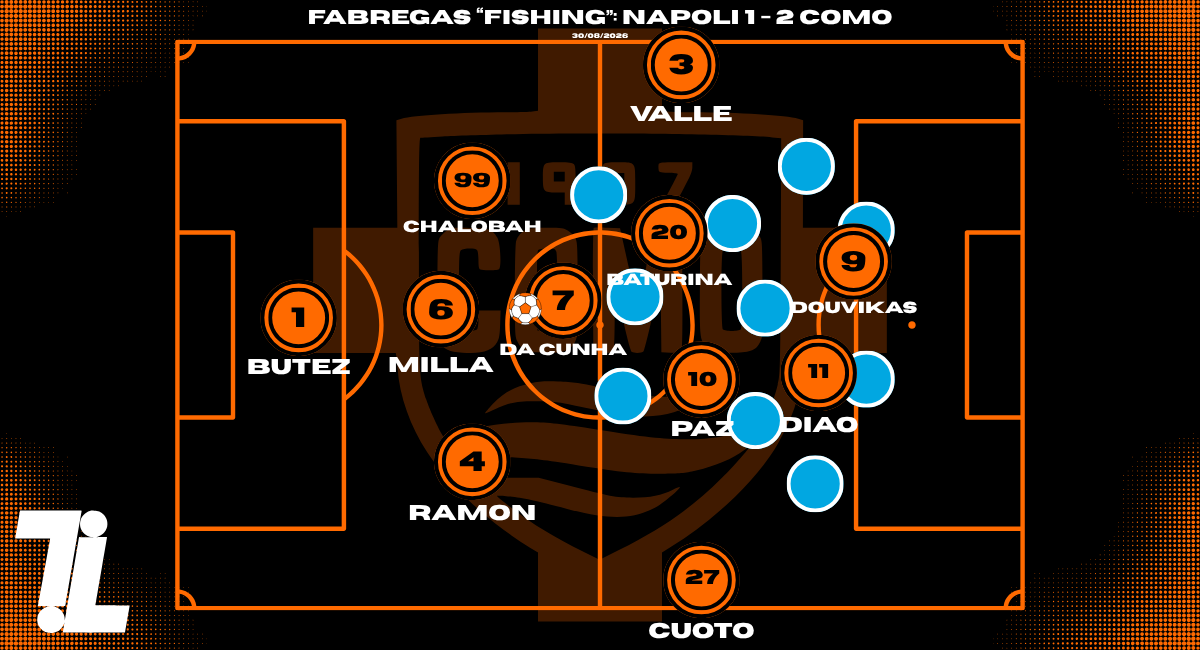
Watch Como build and there are spells where almost nothing appears to be happening. The goalkeeper has the ball, the centre-backs separate, a midfielder checks towards it and somebody puts their studs on the ball and waits. Then they wait a little longer. Eventually the opposition striker decides he has seen enough of this carry-on and jumps.
That is usually when Como have got what they wanted.
Fàbregas calls it “fishing”.
“We are ‘fishing’, we’re asking for them to come.”
It is probably the cleanest way to understand his football. Como don’t want possession because their manager spent three years at Barcelona and it would feel slightly wrong if his team spent Saturday afternoon lumping balls towards the corner flag. The ball has a job. Move the opposition, tempt somebody away from the space he was protecting, find the free player created by that movement and then accelerate.
“I don’t like to have the ball just to have it... the main objective is to attack here as soon as possible.”
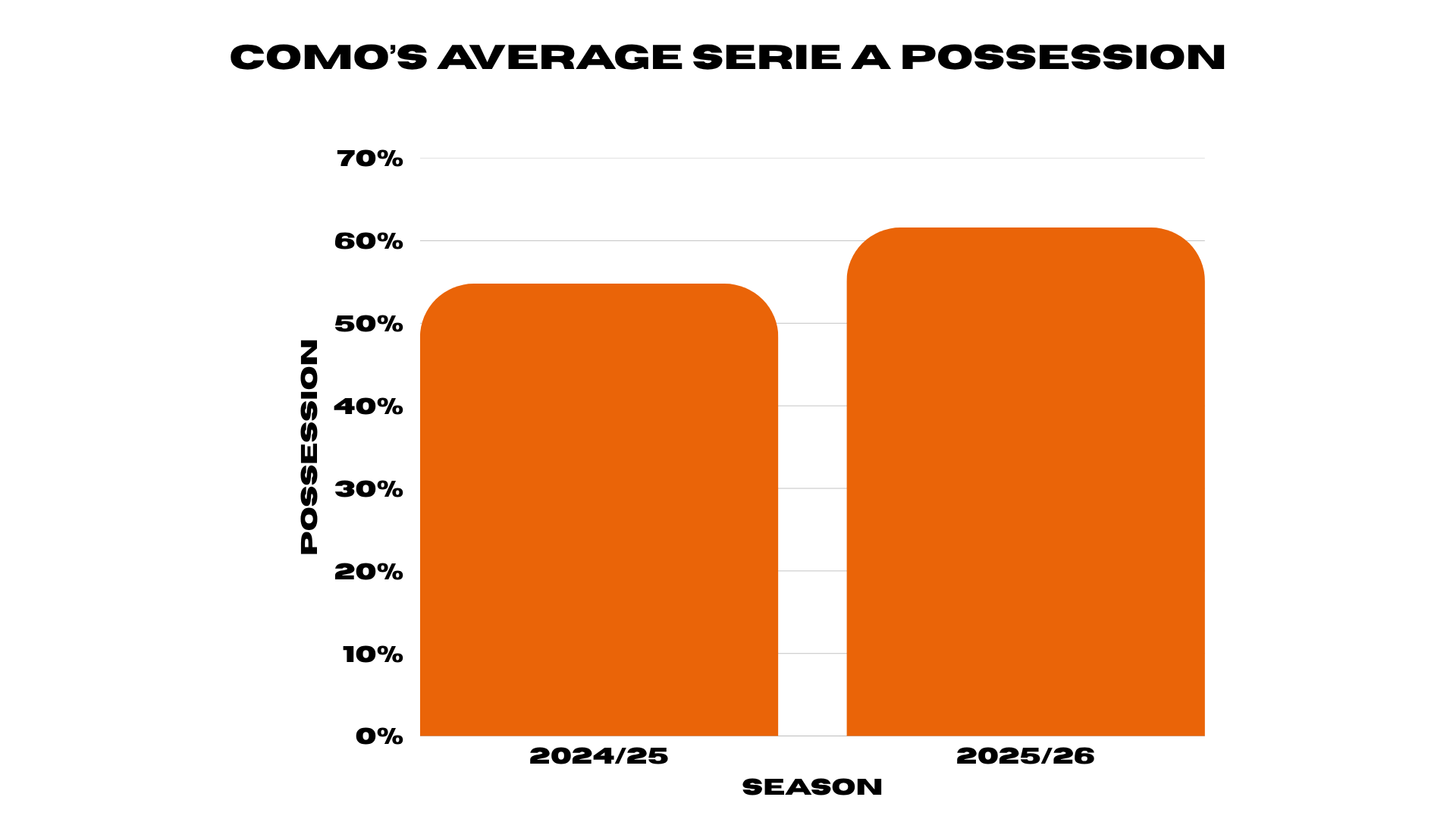
Como averaged 61.6% possession in 2025/26, the highest figure in Serie A, but this was not a side winning the possession graphic and wondering why everybody else was celebrating at full-time. They finished fourth with 71 points, scored 65 goals, conceded only 29 and produced 62.46 xG while allowing 34.32.
The Formation Is Only The First Picture
When Fàbregas explained his build-up principles in a Coaches’ Voice masterclass in 2023, he used a 4-2-2-2. Two centre-backs split around the goalkeeper, the midfielders work close enough to connect but at different heights, the wide players stretch the pitch and the forwards can leave the last line to receive underneath.
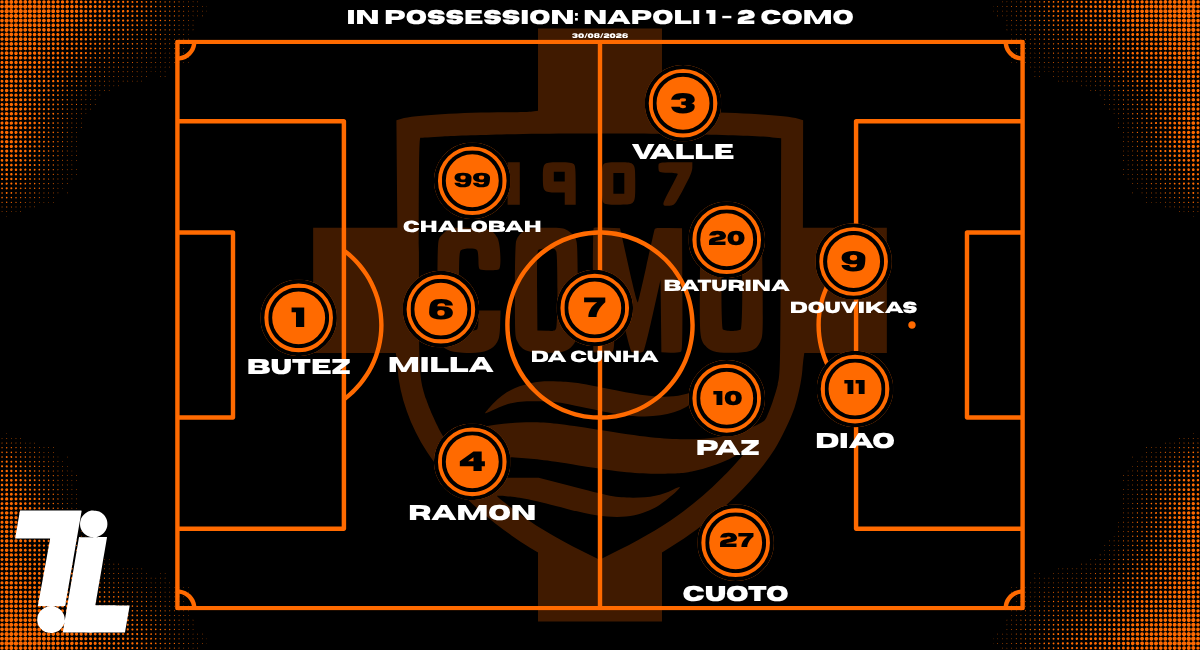
Modern Como have predominantly started from a 4-2-3-1, but that picture changes quickly. One pivot can drop towards the centre-backs while a full-back advances and the winger ahead comes inside. On another possession, the pivot drops between the centre-backs and releases both full-backs higher. Once Como establish possession further up the pitch, the formation graphic is basically ancient history.
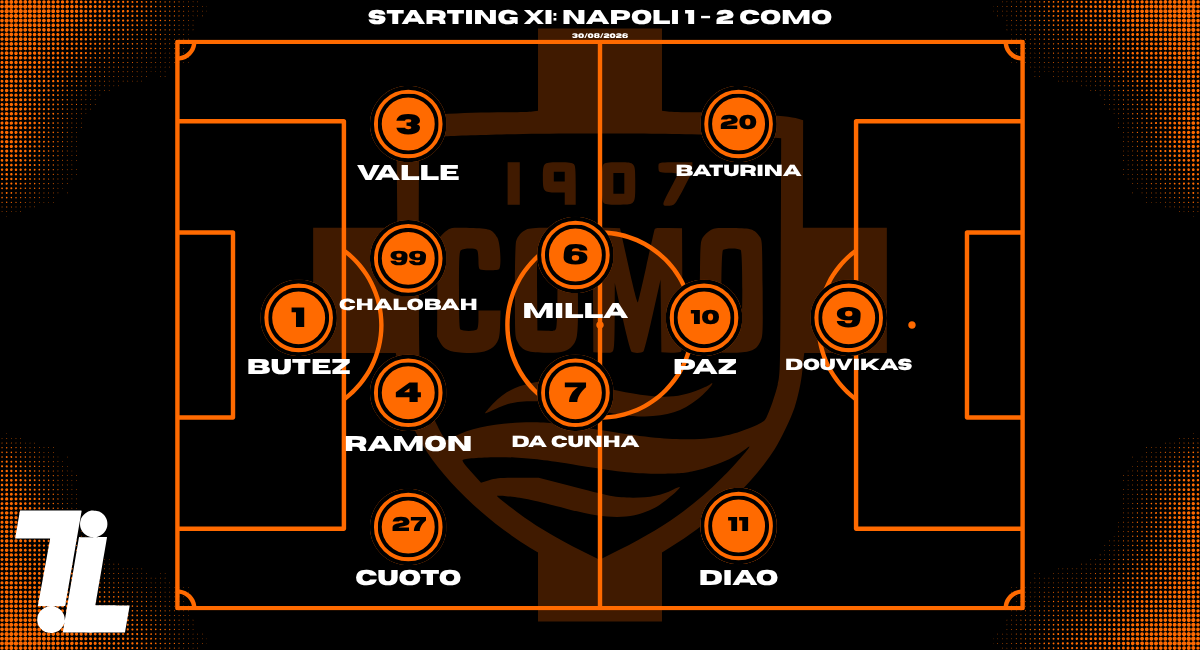
There is a point where writing every variation down starts to resemble a particularly miserable maths exam. The better way to look at Como is through the spaces that need occupying. Somebody gives width, somebody threatens behind, somebody receives between the lines and somebody supports underneath the ball. The player doing each job can change during the same attack. The job itself usually cannot.
A winger can come inside because the full-back replaces his width. A full-back can advance because a midfielder adjusts underneath him. It looks fluid without ever really being random. Fàbregas isn’t asking players to wander. He is trying to keep changing what the opposition has to defend.
Fishing For The First Press
Everything starts with the goalkeeper.
“The goalkeeper is also one more player that we need to use.”
If the opposition press Como’s two centre-backs with two forwards, the goalkeeper potentially gives them a 3v2. Push another midfielder forward to remove the spare player and the advantage hasn’t necessarily disappeared. It may simply have moved into the space he has just left.
That is why the early circulation can look slower than it really is. The first few passes are not always trying to move the ball forward. Sometimes they are trying to move the opposition forward.
Across to the centre-back. Back to the goalkeeper. Across again. Nobody comes? Carry the ball. Somebody jumps? Now play behind him.
“We are jumping a line because we attracted the pressure.”
By November 2025, Como had completed 725 line-breaking passes, the most in Serie A. At the same point they had attempted only 425 long passes, the fewest in the division, with just 7.7% of their passes travelling long. They weren’t passing short because it looked nice. They were bringing the press close enough that the next action could remove several opponents.
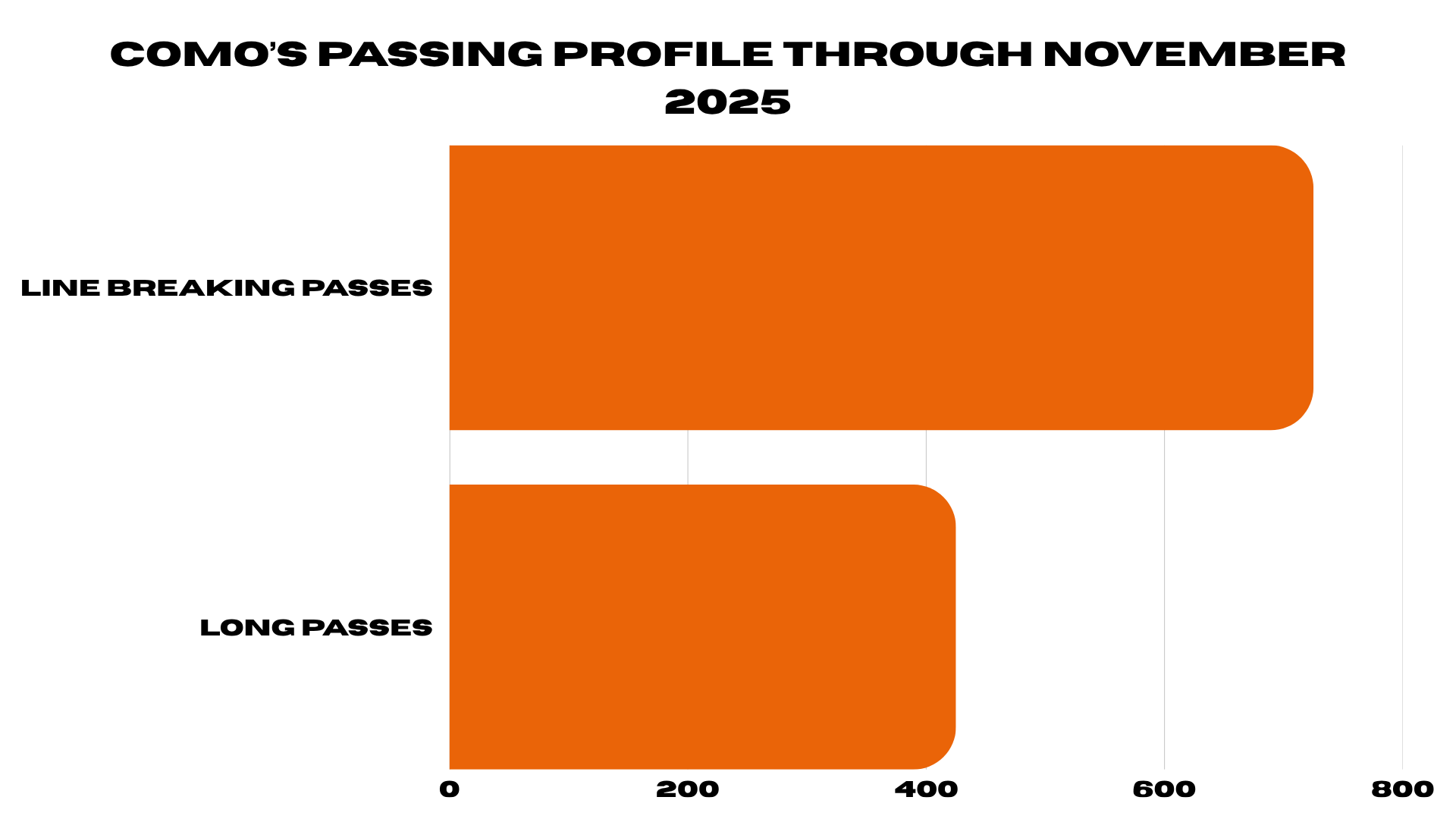
There is more pragmatism underneath it than “fishing” might suggest. If the opposition refuse to engage, Como can carry forward. If the centre is blocked and the depth is available, they can go over the pressure. The whole point is to get somewhere useful, not to complete a pre-agreed number of passes before crossing halfway.
Four Metres, One Touch And The Third Man
Fàbregas places huge importance on what happens immediately before a player receives the ball.
“This needs to be a sprint acceleration of four-five metres to get away from him... then you have to play one-touch.”
Four metres sounds like absolutely nothing. It can completely change a possession. If a midfielder simply checks back with an opponent following him and receives square, Como have moved the same pressure ten yards forward. Draw the defender towards you, accelerate away, scan before the pass arrives and receive half-open, and suddenly the next line is visible.
A numerical superiority on a tactics board means very little if the spare player can only receive facing his own goalkeeper. Scanning, body orientation, distance from the marker and the weight of the pass are what turn the structure into actual progression.
The same thinking sits behind Fàbregas’ obsession with the third man.
“The two midfielders [are] very close to each other but never on the same line... and you always have to find the third man.”
Player A wants to find Player C. The pass isn’t available, so A finds B. The defender moves towards B and B connects with C. The clever bit isn’t the three passes. It is that C now receives beyond the opponent who originally blocked the route.
That also explains the different midfield heights. Two players standing flat can often be affected by the same pressing angle or cover shadow. Stagger them and one can become the bounce player while the other appears beyond pressure.
Modern Como are more flexible than treating “never on the same line” as a law of physics. They will occasionally show players towards similar horizontal references to attract opponents before somebody moves away. Como just don’t want to give the opposition the same picture long enough to get comfortable.
Paz Lives Where Defending Gets Awkward
Once Como get through the first pressure, the problem usually arrives at Nico Paz.
Paz isn’t simply waiting in the No.10 position for the build-up to reach him. Find a position between an opposition midfielder and centre-back and neither particularly wants to own the problem. Drop deeper and the midfielder has to follow towards his own goal. Stay higher and the centre-back has to decide whether he can leave the line without opening the space behind.
“Are you going to come with me or you’re going to let me play?”
If the centre-back follows, the striker or an inside runner can attack the depth he has left. If the defender stays, Paz can potentially receive between the lines and turn. The centre-forward helps even when he barely touches the ball because his threat in behind makes it harder for a centre-back to follow Paz freely.
Napoli showed one possible solution in the Coppa Italia quarter-final in February. Juan Jesus followed Paz aggressively, even when he moved well away from the penalty area, and restricted his ability to turn. The obvious consequence was the space appearing behind Jesus whenever he went with him. Como simply did not attack it well enough on the night.
So you can follow Paz. You just need somebody else to deal with what he leaves behind.
Width Belongs To The Team
Fàbregas is equally clear about stretching the pitch.
“I like to have a lot of width with two players on the line... threatening and pinning the fullbacks.”
The idea isn’t simply to manufacture crosses. Keep the full-back narrow and Como can access the wide player. Move him towards the touchline and the gap between him and his centre-back grows. Shift the centre-back across to cover it and the middle changes again.
Modern Como have turned that into a fluid system of replacement. The winger does not own the touchline. The team does. If the winger comes inside, the full-back can take the width. If the full-back goes high, somebody adjusts underneath him. The positions can change, but the responsibilities keeping the structure together cannot simply disappear.
The best recent example came in Como’s 2-1 win away to Napoli on August 30. Luis Milla dropped between Jacobo Ramón and Trevoh Chalobah to form a back three, Lucas Da Cunha stayed between Napoli’s first and second lines, while Paz and Martin Baturina occupied another line between midfield and defence.
Baturina had started as the nominal left winger. For the opening goal in the 17th minute, he was nowhere near the left touchline. Assane Diao supplied the ball from the right and Baturina arrived through the centre of the box to finish. Napoli equalised through Rasmus Højlund in the 30th minute before Tasos Douvikas restored Como’s lead five minutes later.
The team sheet said left wing. The attack had moved on from that information quite a while earlier.
The Cleverest Bit Might Be Behind The Attack
The combinations get the clips. Como’s improvement behind the ball may be the bigger reason they went from interesting to genuinely good.
They conceded 52 league goals in 2024/25. A year later, that number was 29. Their xGA dropped from 44.17 to 34.32.
A lot of that defending starts while Como still have possession. When one full-back advances, a dropping pivot can adjust underneath and keep more protection behind the attack. Fàbregas also has a more aggressive version where the pivot drops between the centre-backs and both full-backs go higher. Como get another player forward, but the centre-backs are now wider and losing the ball through the middle becomes a much less pleasant prospect.
Como therefore keep protection underneath the attack, normally through the centre-backs and midfielders positioned close enough to collect clearances, stop the first forward pass or get tight to an opposition striker before he can turn.
This is what people mean by rest defence, which is a slightly grand way of asking: if this attack goes wrong in two seconds, have we left anyone in a sensible place?
A poor clearance can fall straight back to Como. The midfielder recycles it, the opposition turn towards their own goal again and another attack begins. They defended the first one. They just never really got out.
Lose It And The Pitch Gets Very Small
By November 2025, Como had produced 86 high turnovers, more than any team in Serie A, alongside 130 pressed sequences and a league-high 375 defensive actions. Their 7.8 PPDA was the lowest across Europe’s big five leagues at that stage. Across the completed season, their PPDA finished at 8.02, again the most aggressive figure in Serie A.
The numbers make sense when you look back at the attack. Como already want players close to the ball because those distances help short combinations. Once possession disappears, the same distances become pressing distances. The opponent can win the ball without really winning the right to attack.
If the first pass stays inside that crowded area, Como can surround the receiver and start again. If the counterpress is beaten, they settle into a recognisable 4-4-2, with the No.10 joining the striker and the wide players dropping alongside the central midfielders.
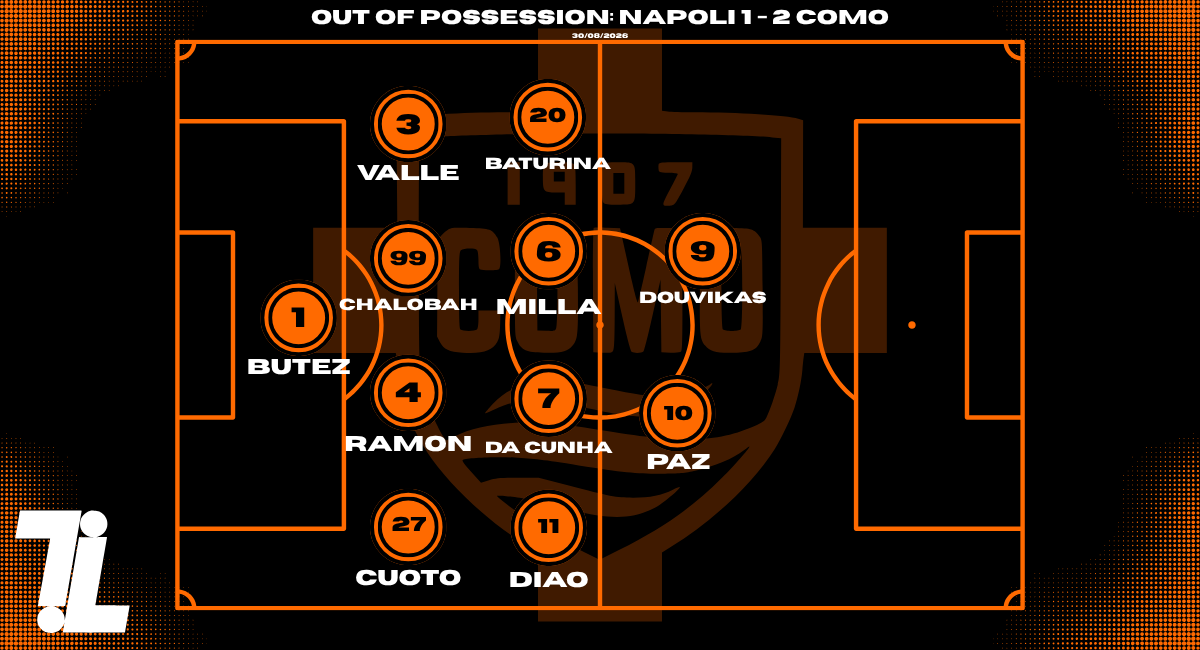
Even then, the press is more calculated than frantic. The front two protect central access and try to influence possession outside. Once the ball reaches the flank, the near winger jumps, the full-back supports him, the midfield shifts across and the far winger comes inside to keep the block compact.
The touchline does some of the defending for them.
Saying Como “press high” is true. It just misses the more interesting bit. They are trying to decide where you have the ball before all the running begins.
So How Do You Hurt Them?
Packing players around the ball has a fairly obvious consequence: there are fewer of them somewhere else. The difficult bit is getting there before Como take it back.
Refusing to press the goalkeeper only gets you so far. Give technically secure centre-backs 20 yards and eventually one will carry forward until somebody has to engage. A better approach is selective pressure. Protect the pivot and Paz first, allow circulation somewhere harmless, then go when the receiver’s body position closes, the ball travels towards the touchline or a backwards pass gives everyone time to lock the next options.
Once possession is won, the first pass has to actually get you out. Inter showed the danger in their 4-3 win over Como last season, repeatedly finding Marcus Thuram with vertical and longer passes beyond Como’s advanced defensive line. The point wasn’t simply “hit it over the top”. Inter got through the first pressure quickly enough that Como’s aggressive starting positions became something to attack.
If the first pass after the turnover goes straight back into the area where Como have just lost it, you may have borrowed the ball for about three seconds. Reach the weak side or find a forward beyond their midfield and suddenly the centre-backs have to turn towards their own goal rather than stepping forward.
Como want the game in front of them and around the ball. The opponent wants to make them run backwards.
Much easier written here than done at the Sinigaglia.
What The Numbers Tell Us
In 2024/25, Como finished 10th with 49 points, winning 13, drawing 10 and losing 15. They scored 49 goals, conceded 52, averaged 54.8% possession, generated 45.80 xG and allowed 44.17 xGA.
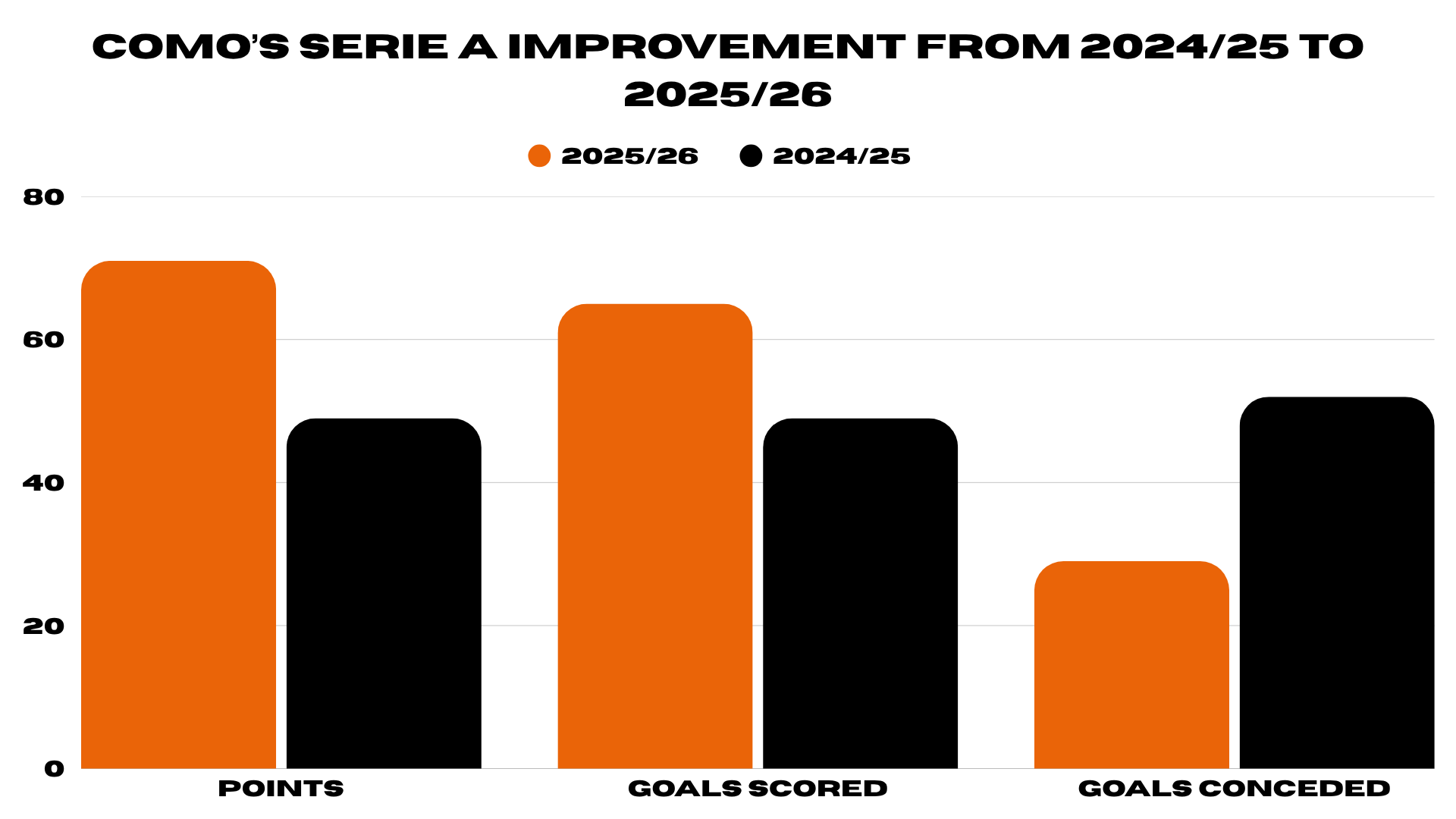
In 2025/26, they finished fourth on 71 points after 20 wins, 11 draws and seven defeats. Goals rose from 49 to 65, goals conceded fell from 52 to 29, and their goal difference moved from -3 to +36. Possession climbed from 54.8% to 61.6%, xG rose to 62.46, and xGA fell to 34.32.
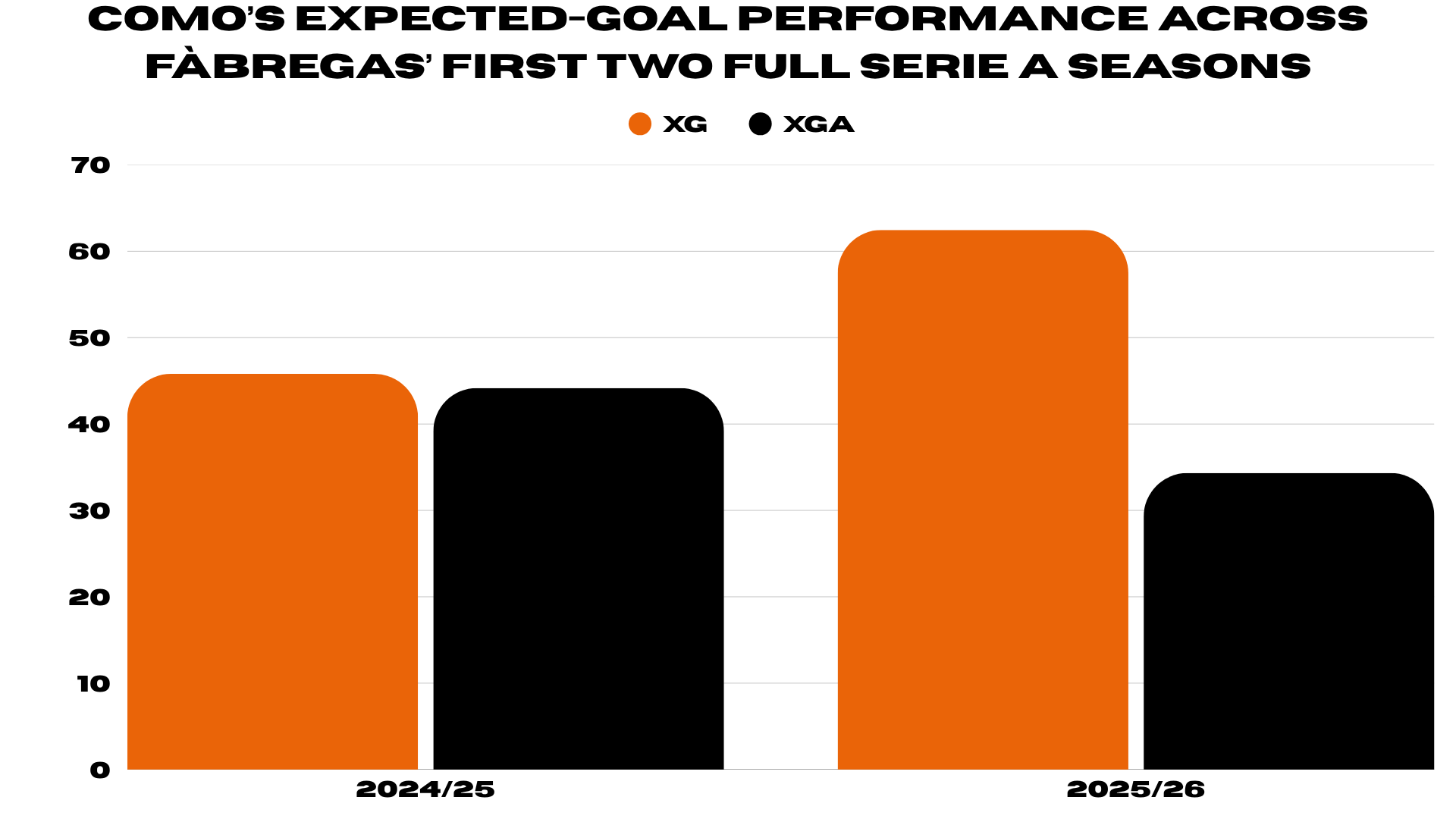
That is 22 more points, 16 more goals and 23 fewer conceded. Their expected-goal difference went from +1.63 to +28.14.
The early 2026/27 numbers still look familiar. Through their opening two league matches, Como averaged 58.5% possession, 20.5 shots, six shots on target and 533 completed passes per game at 89.4% accuracy. Across those 180 minutes they produced 41 shots and 69 touches in the opposition box. It is far too small a sample to start declaring anything about the season, but Fàbregas has hardly spent the summer ripping up the plan.
Fàbregas Isn’t Really Coaching A Formation
The line from Fàbregas’ original masterclass that probably sums everything up best has very little to do with a 4-2-2-2.
“Instead of kicking the ball and playing casino... you have an idea of playing.”
Como certainly do.
Next time you watch them, don’t spend too long staring at the 4-2-3-1 graphic before kick-off. Watch the opposition striker when the goalkeeper stands still. Watch the midfielder’s shoulders before the ball arrives. Watch who provides the width when the winger disappears inside. Watch what the centre-back does when Paz drops away from the front line.
And when Como lose possession, don’t watch the player who gave it away. Look behind him. Look at the distance between the midfielders and centre-backs. Look at who attacks the first receiver and who stays underneath. Most of all, look at whether the opposition’s first pass has actually taken them anywhere.
Fàbregas isn’t really coaching a collection of pretty passing patterns. He is coaching distances, body orientation, occupation, cover and the next problem one movement creates for the opposition.
The formation tells you where Como started.
The game model is everything they have already prepared for what happens next.
If this one landed, the newsletter’s where the rest of it lives — two or three pieces a week, no noise.
Subscribe