 Touchline Sport
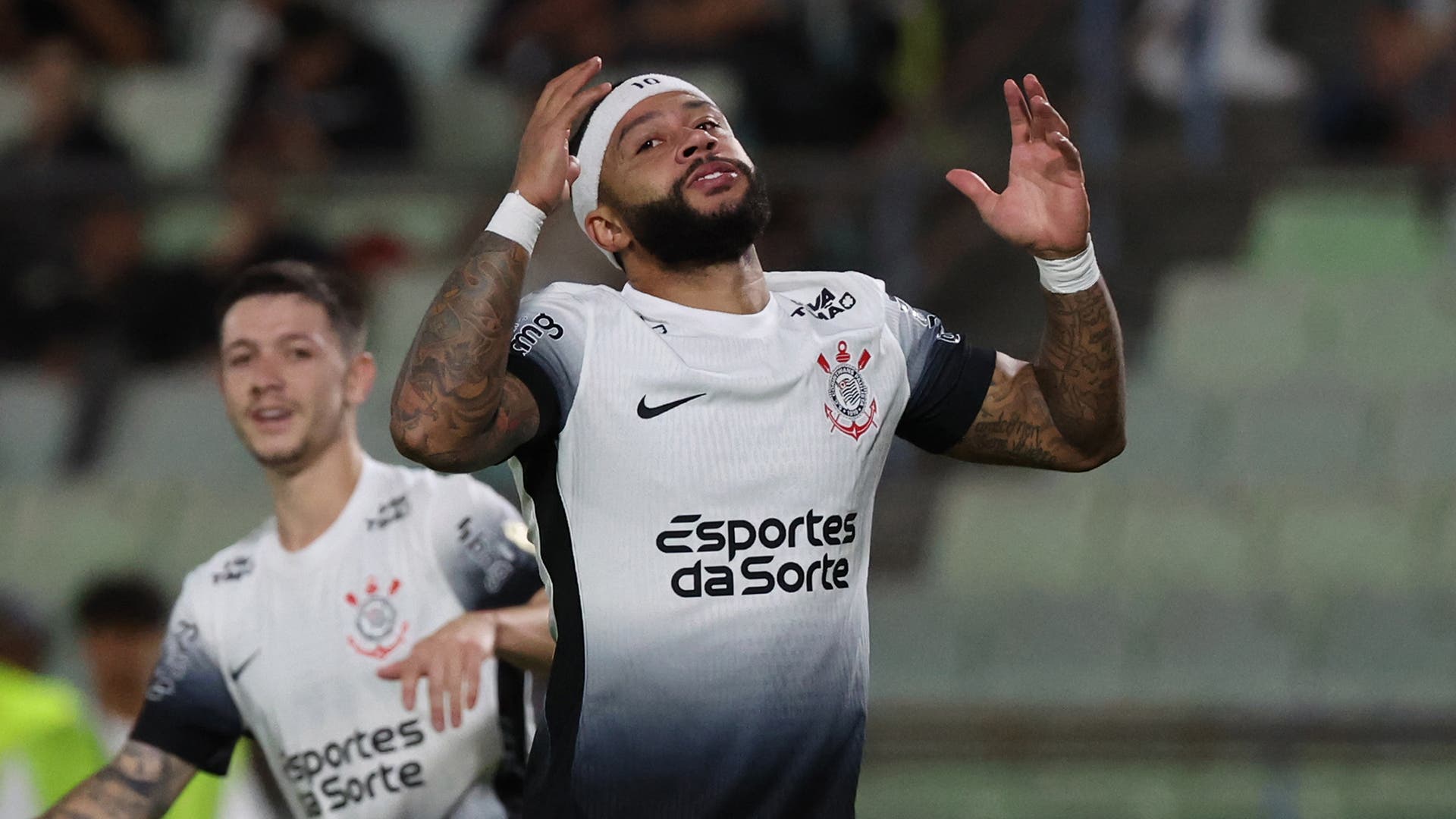
Corinthians have spent more than a century building a reputation as one of Brazil’s great people’s clubs.
Founded by five railway workers in São Paulo in 1910, the club grew from humble beginnings into a seven-time Brazilian champion, Copa Libertadores winner and two-time world champion. The support stretches far beyond the city, while Democracia Corinthiana gave the club an identity that went beyond trophies and football.
On Saturday, Corinthians members were supposed to vote on who should have a greater say in running it.
They never got the chance.
Less than 24 hours before an extraordinary general assembly was due to begin on 19 September, the São Paulo Court of Justice suspended the meeting following an appeal from three life councillors. It is the fourth time an assembly connected to the reform of Corinthians’ statute has been stopped.
The 11 proposals due to go before members covered presidential elections, voting rights and the make-up of some of the bodies that govern the club. They are now frozen while the court considers whether the process used to bring them to a vote followed Corinthians’ existing rules.
That carries more weight at Corinthians than it might at an ordinary privately owned football club.
Corinthians remains a civil association. There is no billionaire owner sitting above everything, and its statute decides how power is divided between the president, the Deliberative Council, the Conselho de Orientação, known as Cori, and the general assembly of members.
In normal football language, it is the rulebook deciding who gets to vote, who can run for office and how the people already inside Corinthians can change those rules.
The latest legal challenge was brought by life councillors Ademir de Carvalho Benedito, Alexandre Husni and Guilherme Gonçalves Strenger. Part of their argument centres on Article 97(m) of the existing statute and whether Cori was given the role required of it before the proposed changes reached the Deliberative Council.
Their case is essentially that Corinthians needed to follow its existing constitution properly before asking members to rewrite it.
How the reforms survived long enough to reach Saturday's scheduled vote takes a little more explaining.
In April, the Deliberative Council considered the proposed statute as one complete document. It was rejected by 93 votes to 60.
That might sound fairly conclusive. The meeting continued.
Councillors then considered individual amendments contained within the rejected reform. Several survived when voted on separately, with key proposals approved by 79 votes to 57.
Corinthians therefore finished the process with two apparently conflicting results. The proposed new statute had been rejected as a whole, but individual parts of that same reform had received enough support to continue.
Those April votes were not the final decision.
The Deliberative Council was deciding which amendments could move through the club's internal process. Actually changing the statute still required approval from eligible Corinthians members at a general assembly.
That was the vote scheduled for 19 September.
Members were not going to be asked to reconsider the entire document rejected in April. A first-instance judge ruled on 11 September that the assembly could proceed only with the 11 measures that had already been approved individually by the Deliberative Council.
The three councillors challenging the process argue that those proposals should never have reached that stage. As well as questioning Cori's role, they dispute whether parts of a statute rejected as a whole could simply survive through separate votes afterwards.
The first-instance court accepted that they could.
Seven days later, the appellate court stopped the final member vote while that argument is considered.
The latest injunction has not declared the 11 reforms themselves illegal. The court is dealing with the procedure used to get them onto the ballot and the consequences if that procedure is later found to have been invalid.
With another presidential election coming in 2026, those consequences could become difficult to unpick.
Corinthians could change who is allowed to vote, hold an election under those new rules and then discover afterwards that the amendments themselves were never validly adopted. Sorting out the presidency after that would be quite a job.
And who gets to vote is probably the most striking proposal of the lot.
Corinthians' president is currently elected by qualifying members of the club's social association. Only 4,184 people took part in the 2023 presidential election.
The club's Fiel Torcedor programme had 118,545 active members by January 2026.
Those 118,000 supporters were not all about to receive ballot papers overnight. The proposal contained eligibility and contribution requirements, but it would allow qualifying Fiel Torcedor members into presidential elections and widen a system traditionally controlled through the social club.
For one of the best-supported clubs anywhere in South America, having little over 4,000 people choose the president is quite a contrast.
It also shows how much more is being decided here than the wording of a statute.
For years, supporting Corinthians and formally having a say in who runs Corinthians have been very different things. Opening the vote to qualifying Fiel Torcedor members would begin to bring those two groups closer together.
Other proposals would reduce the qualifying period for existing social members from five years to three, allow two-round presidential elections, alter the composition of the Deliberative Council and reduce the number of automatic places on Cori.
A transitional provision could also affect whether current president Osmar Stabile is eligible to contest the 2026 election.
Whoever eventually wins that election will inherit rather more than an argument about voting rights.
Corinthians reported a R$143.4 million deficit for 2025 and gross debt of R$2.723 billion, including R$642 million connected to the Neo Química Arena. The accounts followed another difficult political year, with Augusto Melo removed from the presidency and Stabile taking over.
The next leadership will have to deal with debts measured in billions of reais while working out how Corinthians funds its football operation and what kind of institution the club wants to be in the years ahead.
The possibility of Corinthians eventually adopting Brazil's Sociedade Anônima do Futebol model has formed part of that conversation, although Saturday's meeting was not a vote on becoming a SAF.
The wider statute debate has included how any future conversion might be handled, but none of the 11 proposals due before members would have turned Corinthians into a company.
Saturday's dispute was much closer to the club's existing structure: who should have power inside a member-run Corinthians and how that power should be shared.
There is plenty of history sitting behind that conversation.
During the early 1980s, Sócrates, Wladimir, Casagrande and their teammates became synonymous with Democracia Corinthiana, pushing for players and staff to have a greater voice inside the club during the final years of Brazil's military dictatorship.
A statute dispute in 2026 is obviously a very different thing. Still, at a club where democracy became part of the story Corinthians tells about itself, an argument over who actually gets to vote carries a little more weight.
Romeu Tuma Jr, president of the Deliberative Council, confirmed the suspension after the court ruling.
“In compliance with the court decision, the General Assembly scheduled for this Saturday is suspended.”
There is currently no new date for the assembly.
The full reform has already lost one vote. Individual amendments survived another. The members were supposed to have the final say on those remaining proposals on Saturday.
Now the court has stopped them before they could.
Corinthians will still have to choose a president in 2026. Before they get there, one of Brazil's biggest clubs first has to settle exactly who gets to choose them.
If this one landed, the newsletter’s where the rest of it lives — two or three pieces a week, no noise.
Subscribe