 Touchline Sport
Bray Wanderers were not always spoken about as a pathway club.
They won FAI Cups in 1990 and 1999, collected three First Division titles and spent long stretches in the Premier Division making life awkward for clubs with bigger budgets, better dressing rooms and considerably less wind.
The Carlisle Grounds was never designed to intimidate anybody in the conventional sense. It sits beside the railway line, a short walk from the seafront, and can offer sunshine, rain and a small maritime emergency in the space of one half. But Bray had a clear place in Irish football. They were established, stubborn and usually difficult enough to annoy somebody.
That version of the club faded. Relegation in 2018 was followed by instability, financial trouble and a controversial merger with Cabinteely in 2021. Bray supporters were left asking two questions at once: when would the club get back to the Premier Division, and what exactly would be left of Bray Wanderers when it did?
The answer now emerging is not particularly glamorous, which probably suits the place.
Bray are trying to build their way back through young players. Some have come through the academy. Others arrived after being released, overlooked or left waiting elsewhere. The club has become good at finding players who need senior football and giving it to them before everyone else is fully convinced.
Billy O’Neill has joined Bristol City. Rhys Knight made the same move. Cian Doyle rebuilt his career at the Carlisle Grounds and attracted interest from England before becoming a regular with Grimsby. Harvey Warren earned a move to Dundalk. Justin Ferizaj and Ben McCormack have both used Bray to get themselves moving again.
Bray have become very useful to young footballers.
Now they need that usefulness to become useful to Bray.
A First Team at the End of the Pathway
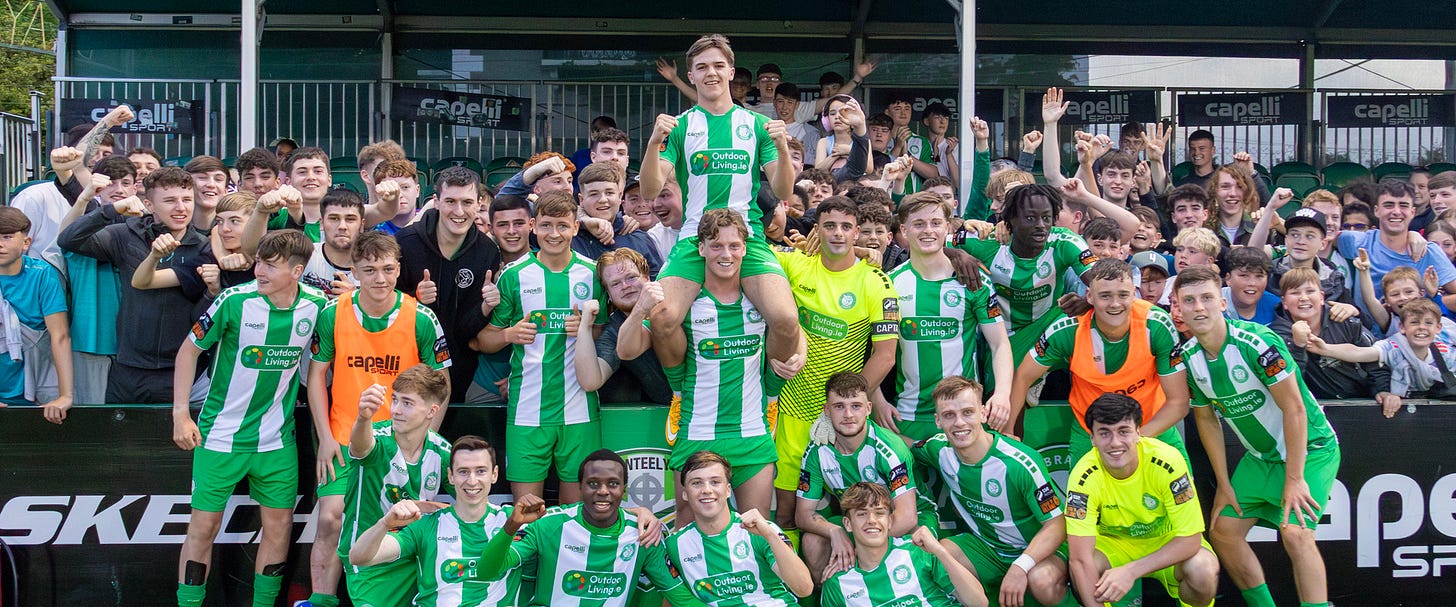
Billy O’Neill’s story is the one clubs usually stick near the front of an academy brochure.
He joined Bray in 2022, became the youngest player to represent the club competitively at 15 years and 222 days and then did the part that is often missing from these stories: he kept playing.
O’Neill was not given five polite minutes at the end of a cup tie so everyone could clap the pathway. He became a proper first-team player, scored 11 goals during the 2025 season and helped Bray push for promotion. Bristol City agreed a permanent move in April 2026, with O’Neill remaining at Bray until the English transfer window opened.
His final home league appearance came in a 4-0 win over Wexford in front of 1,258 supporters. By the time he left, Bristol City had already watched him play against senior defenders, take kicks, lose duels, win them and come back the following week.
That is far more useful than being brilliant in an under-19 game that six people and a dog happened to attend.
Rhys Knight had already taken the same route. He entered Bray’s academy, progressed through the age groups, reached the senior side and joined Bristol City in February. Harvey Warren also came through the Cabinteely and Bray structures, established himself in senior football and later moved to Dundalk.
The pathway works because there is a first team at the end of it.
Irish football has never lacked talented young players. It has sometimes lacked managers and clubs willing to live with them. Teenagers are exciting until they misplace a pass in front of the main stand. Then everyone suddenly becomes very interested in experience.
Bray have been willing to accept the rough edges. That has become one of their strongest selling points.
The Merger Supporters Never Had to Pretend to Like
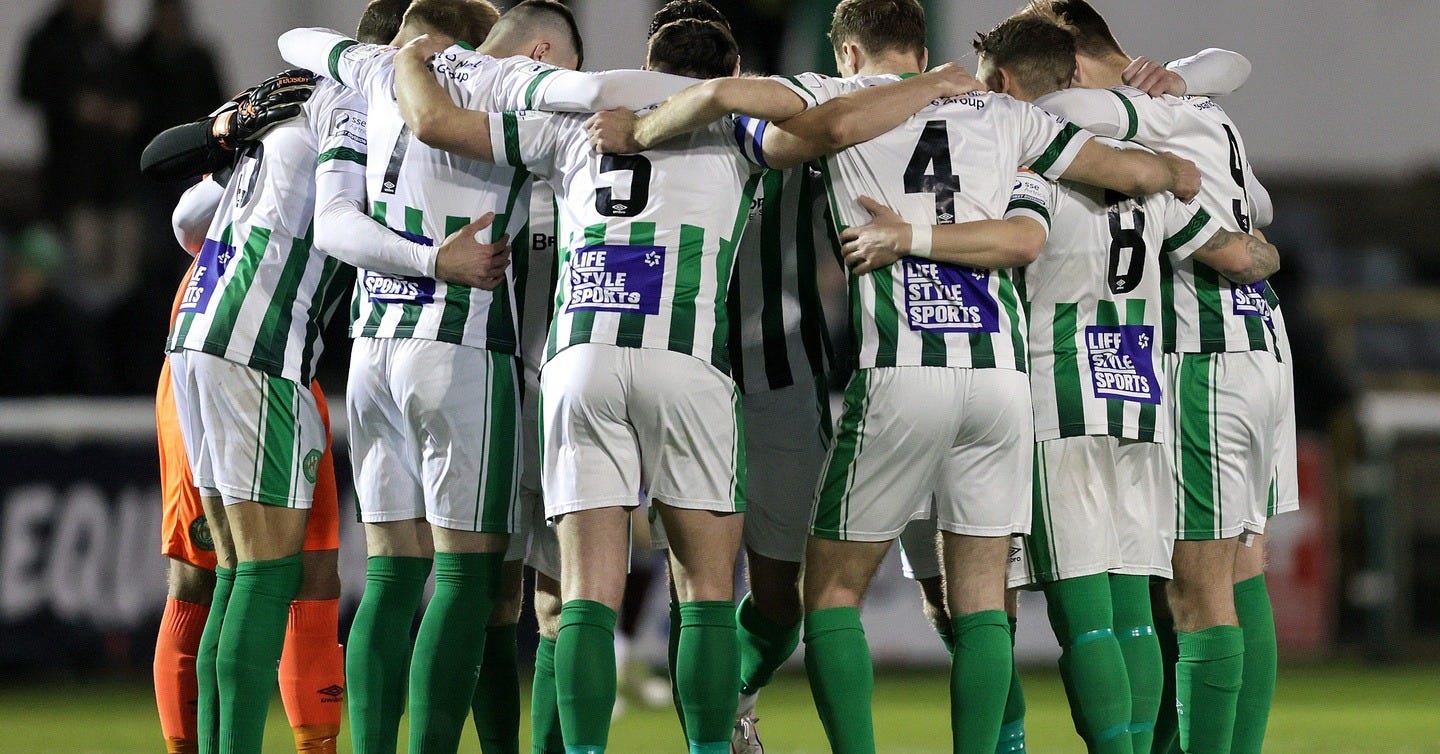
None of this can be separated from the merger with Cabinteely.
The football idea was straightforward. Bray had a League of Ireland history, a senior team and the Carlisle Grounds. Cabinteely had a large underage structure and deep links across south Dublin. Put the two together and, in theory, Bray would gain a wider player pool and a clearer academy system.
Supporters were not obliged to find that comforting.
Many feared Bray were being taken over rather than strengthened. The club kept its name, colours and ground, but Cabinteely chairman Tony Richardson became chairman of the merged operation and Pat Devlin returned in a senior football role. After a poor 2022 season and growing tension around the club, the merger looked less like a clever development plan and more like somebody had moved into Bray’s house and started rearranging the furniture.
Those concerns were genuine. They should not be scrubbed from the story because the youth setup has since produced good players.
Several years on, though, the original football logic is easier to see.
Bray sit in a useful area. Wicklow is on one side. South Dublin and some of the country’s biggest schoolboy clubs are on the other. The club cannot offer the wages or profile of the strongest Premier Division sides, but it can offer something young players often need more.
A place in the team on Friday night.
The relationships with Cabinteely and St Joseph’s have expanded the pool. Players who may be blocked at bigger clubs can look at Bray and see O’Neill, Knight and Warren. The promise is no longer theoretical.
Come here, play well and somebody will notice.
Players Who Needed Somewhere to Go
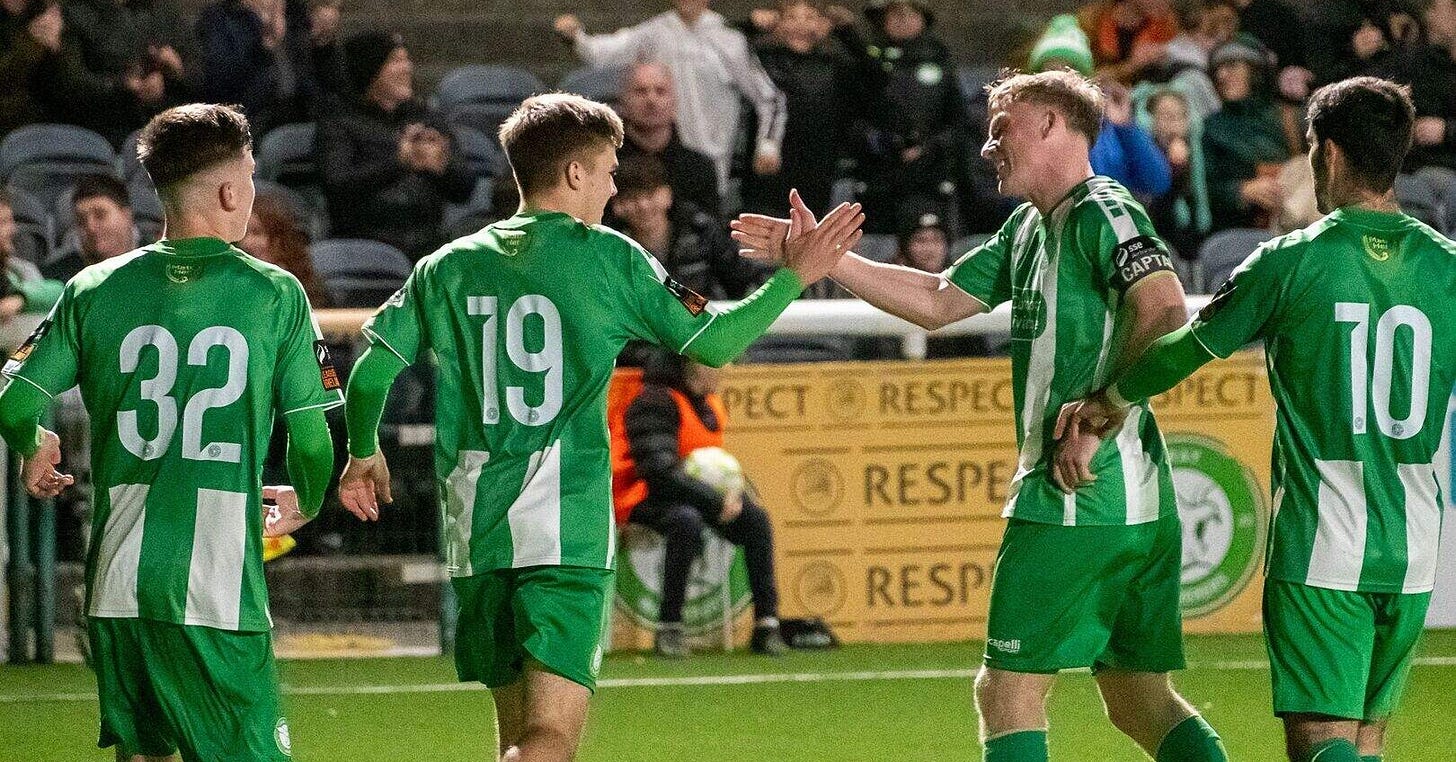
Bray’s model is not only about producing teenagers.
Cian Doyle returned to the club after leaving Shelbourne and became one of the central figures in Paul Heffernan’s side. He brought energy, creativity and the sort of fondness for a yellow card that suggests he wanted referees across the division to remember his name.
More importantly, Bray gave him responsibility. He played 53 league matches across two seasons, contributed goals and assists and helped the club reach another promotion play-off. By the time Grimsby Town showed interest, Doyle was no longer a young player waiting for a career to begin. He had one.
Ben McCormack arrived after leaving Waterford and was immediately trusted to lead Bray’s attack. Justin Ferizaj joined after spells with Shamrock Rovers and Frosinone’s under-19 side, then scored the 90th-minute winner against Treaty United that sent Bray into the 2025 promotion-relegation play-off.
Neither needed to be told about potential. They needed matches.
That is an important part of what Bray have become. Development does not stop when a player turns 20 or gets released by a bigger club. Plenty of careers drift because football decides very early who is worth waiting for and who is not.
Bray have picked up some of the players left between those decisions.
The team has benefited. They beat UCD 6-0, won 5-1 against Cobh Ramblers and lifted the Leinster Senior Cup after defeating St Patrick’s Athletic 2-1 at the Carlisle Grounds. More than 2,000 people watched Bray secure their first senior trophy in 27 years.
For one night, it looked and sounded a little like the Bray people remembered.
The Hard Part Is Keeping the Team Together
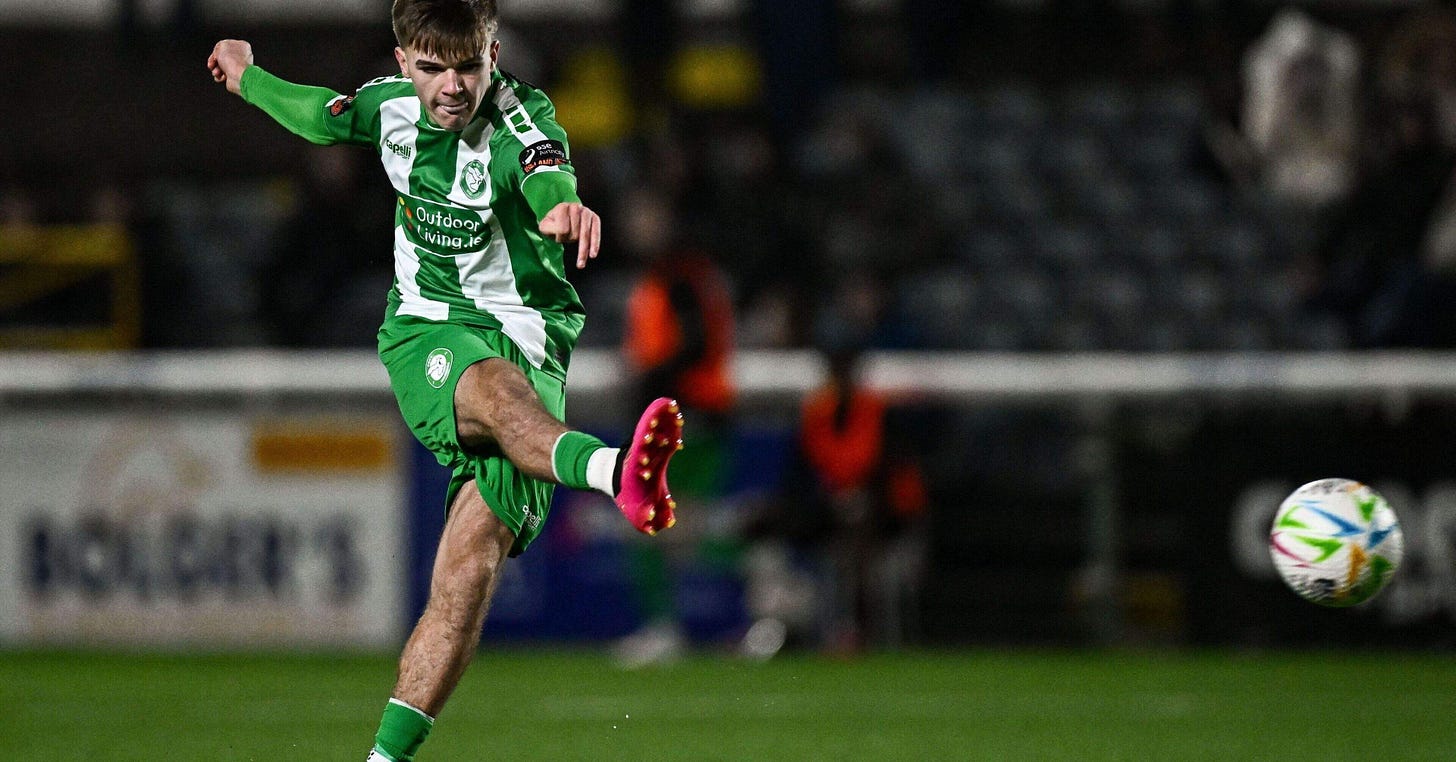
There is one fairly obvious problem with becoming known as a club where talented young players can move on.
They move on.
O’Neill and Knight have gone. Doyle has attracted interest. Richard Ferizaj and Alain Kizenga have also caught attention. Every successful move makes Bray more attractive to the next player, but it can also leave Paul Heffernan trying to win promotion with the replacements.
That tension has been visible in the results. Bray have produced some of the best attacking performances in the division, but they have also lost 4-0 at home to Kerry and followed strong runs with flat defeats.
Young teams can look fearless until the night they look very young.
The new ownership group led by Malachy Burke, JB Gough and David Goldstein took control in September 2025 and inherited a club with a useful football idea already taking shape. Their challenge is not to reinvent it. It is to make sure Bray receive enough value from the players they develop and reinvest it before the first team is stripped down again.
That means stronger contracts, better succession planning and recruitment that starts before the phone rings from England. Transfer fees have generally remained undisclosed, so nobody outside the club can honestly say how successful Bray have been financially.
The appointments of David Foley as technical director and former Ireland captain Áine O’Gorman as academy director suggest the structure is being taken seriously. O’Gorman now oversees six academy teams and the Emerging Talent Programme, becoming the first female academy director in the League of Ireland.
Bray once built teams that won cups and held their own in the Premier Division.
They are trying to get back there in a different way now, by finding players early, trusting them before others do and giving second chances to those who have run out of first ones.
The Carlisle Grounds has become somewhere young players can make a name for themselves.
The next task is making sure they leave Bray with more than a good farewell post.
Ideally, they leave it in the Premier Division.
If this one landed, the newsletter’s where the rest of it lives — two or three pieces a week, no noise.
Subscribe for free