 Touchline Sport
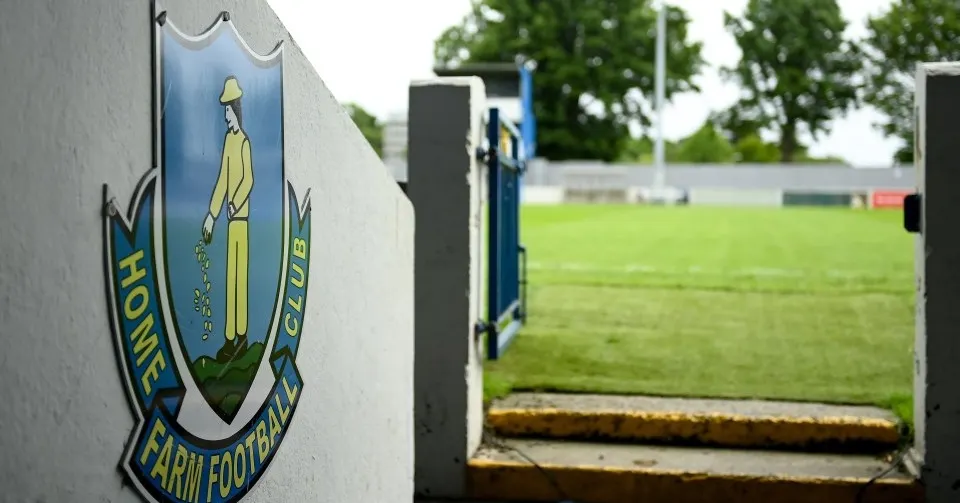
Home Farm were meant to be in Whitehall for their first home game of the National League. Instead, road closures forced the Mervue fixture to Galway and Gavin Peers’ side were back on the bus for a third away trip in three games. By half-time they were 4-1 up. By full-time they had won 6-1.
Not a bad way to deal with being denied your first home game.
It rounded off a start that has been much better than merely respectable. Home Farm opened with a 2-2 draw at Bonagee United, rescued by Alan Leonard in the 93rd minute, before going to Cockhill Celtic and winning 2-0 with both goals coming right at the end. Patrick Abako scored in the 89th minute and Owen Benson added another in stoppage time. Four points from those first two trips would have been taken happily enough. Then they went to Mervue, who were also unbeaten and level with them on four points, and made the afternoon look far easier than anyone expected.
Robert Manley opened the scoring after 15 minutes, Sifax Mellah had another three minutes later and Aaron Walsh made it three before the half-hour. Home Farm went in 4-1 ahead, Manley scored again after the break and they left Galway with six goals, seven points from nine and top spot in Group 1.
Three games is three games. Nobody needs to start planning an open-top bus around Whitehall.
Still, for a club that hasn’t been in the League of Ireland since 1999, this is about more than getting off to a good start. Home Farm have spent the best part of three decades being spoken about through the players who came from there. For once, there is a senior team giving people a reason to talk about Home Farm itself.
The Home Farm People Remember
The strange thing about Home Farm is that your idea of the club probably depends on when you started watching Irish football.
Older supporters remember them as a League of Ireland club and FAI Cup winners. Younger supporters are more likely to know the name from the early career of an Irish international, usually a few lines before Manchester United, Liverpool or Aston Villa appears.
There is plenty of history behind both.
Home Farm were founded in 1928 around Drumcondra and Whitehall, with the club’s own history tracing its beginnings back to two groups of local footballers coming together after one side’s ball burst. It is probably not the origin story anybody would invent now, but nearly a century later the club is still there.
They entered the League of Ireland in 1972 after taking over the share capital of neighbours Drumcondra and only three years later went into the FAI Cup as 500/1 outsiders. Dundalk, Cork Celtic and St Patrick’s Athletic were beaten on the way to a final against Shelbourne at Dalymount Park, where around 9,000 watched Frank Devlin score the only goal.
Home Farm had won the FAI Cup with a team whose average age was 21.5.
If you wanted one result to sum them up, you could do a lot worse.
The club stayed in the League of Ireland until 1999, latterly as Home Farm Everton, although over time their reputation became less about the senior side and more about the ridiculous number of footballers coming through underneath it.
The Talent Factory
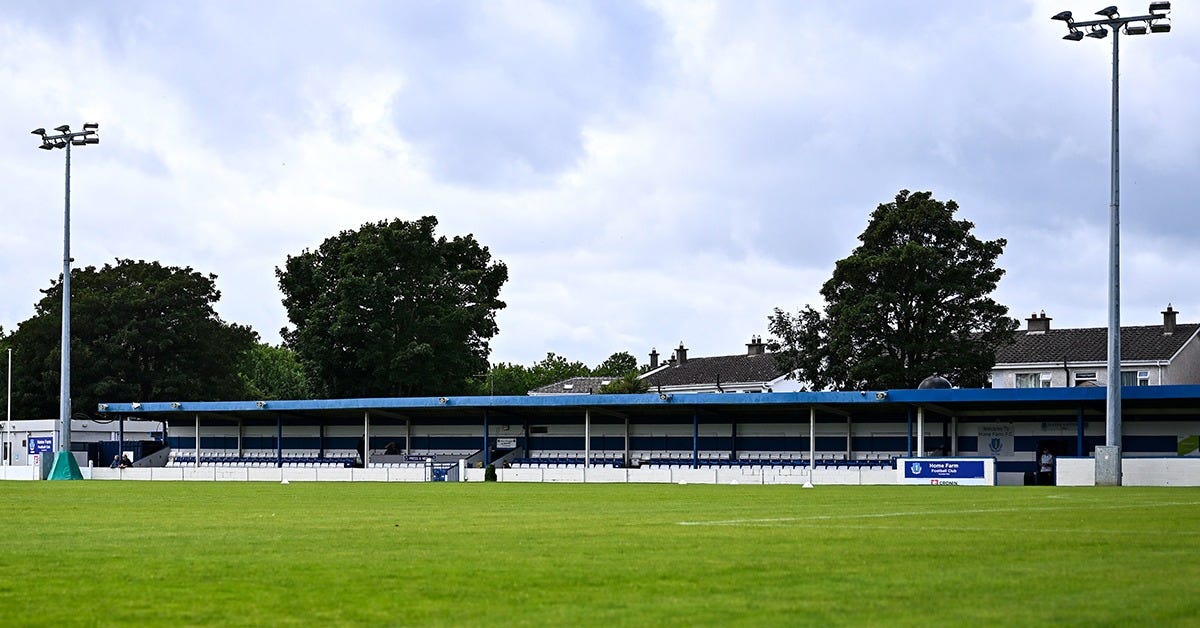
Johnny Carey, Liam Whelan, Liam Brady, Ronnie Whelan and Richard Dunne all came through Home Farm. There are enough others to make picking an alumni XI a fairly easy way to start an argument.
That production line became the club’s identity. Home Farm kept giving young players a start, long after the League of Ireland team disappeared, but there was an obvious issue when those players got older. If they reached the point where they needed senior national football, Whitehall could only take them so far.
Gavin Peers arrived two years ago with the job of trying to fix that. The former Sligo Rovers defender came in to restructure the football side of the club and now manages the National League team. Speaking to RTÉ before the competition started, he described the idea in fairly simple terms.
“The whole strategy coming in was to create a structure for players in the club to be able to stay. The third tier was that platform for them.”
Home Farm don’t need convincing that they can develop footballers. They have nearly 100 years of evidence for that. The missing bit was always what happened when those footballers were ready for something more.
That is where the National League and DCU come in.
The DCU Link
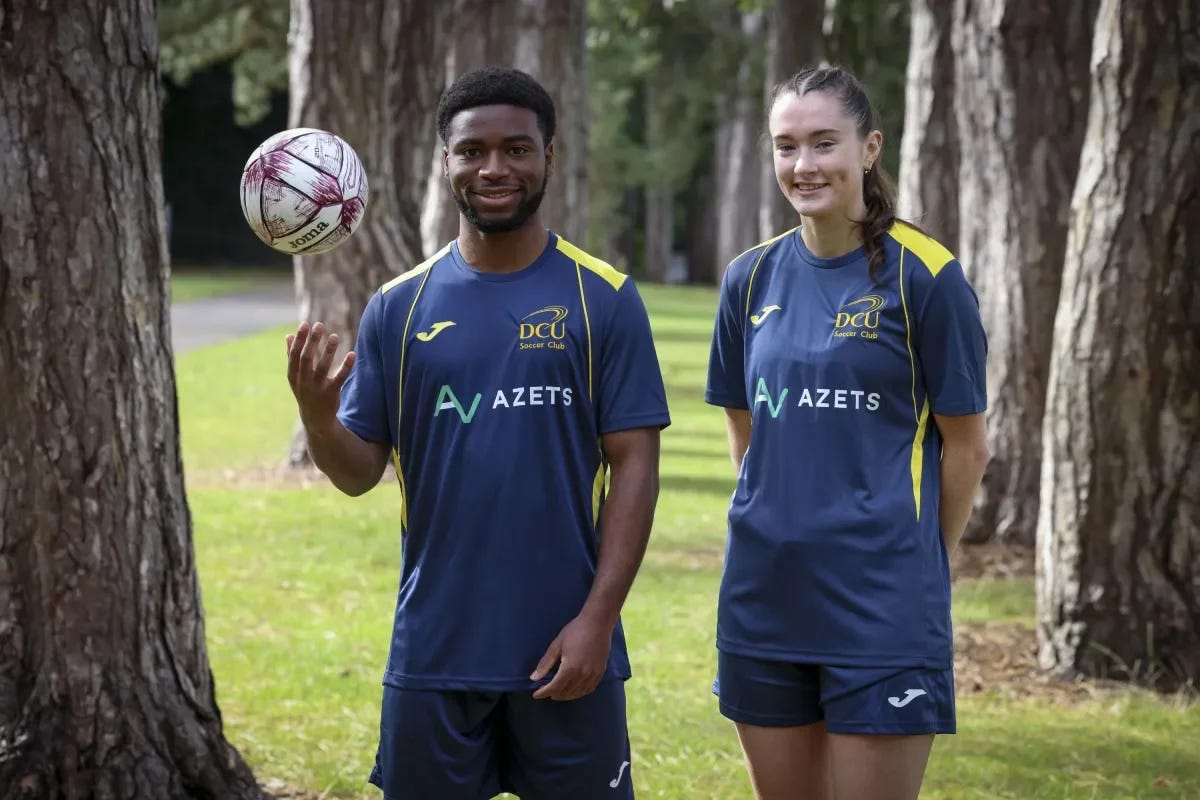
Plenty of football partnerships arrive with a scarf, a handshake and enough talk about an “exciting future” to fill a press release. Home Farm and DCU have a fairly practical reason for working together.
Home Farm already have a huge player base and a football structure stretching from academy level into the adult game. DCU brings third-level education, elite-athlete support and facilities sitting close by. Together they applied for a place in the National League, giving players the chance to continue into senior football without immediately having to choose between that and education.
Home Farm currently run 34 boys’ and girls’ teams from under-8 upwards, as well as an academy for younger children. The club has never struggled to find the next group coming through. The difficulty was giving them somewhere to go once youth football stopped being enough.
Now there is a senior national side sitting above them.
Players will still leave, of course. That has always been part of Home Farm. If a bigger club wants one of your best young players, the answer probably isn’t to change the locks and hope nobody notices. But there is at least a reason to stay a little longer.
The senior operation looks more serious too. Nicola Brannigan is chief executive, Paul Whelan is Chief Football Officer and Ronnie Whelan has returned as Global Ambassador. INTERSPORT Elverys are on the shirt, Umbro supply the kit and Peers has a team that is already giving all of that work a bit of credibility on the pitch.
Football tends to make the rest easier when you are winning.
The Route Back
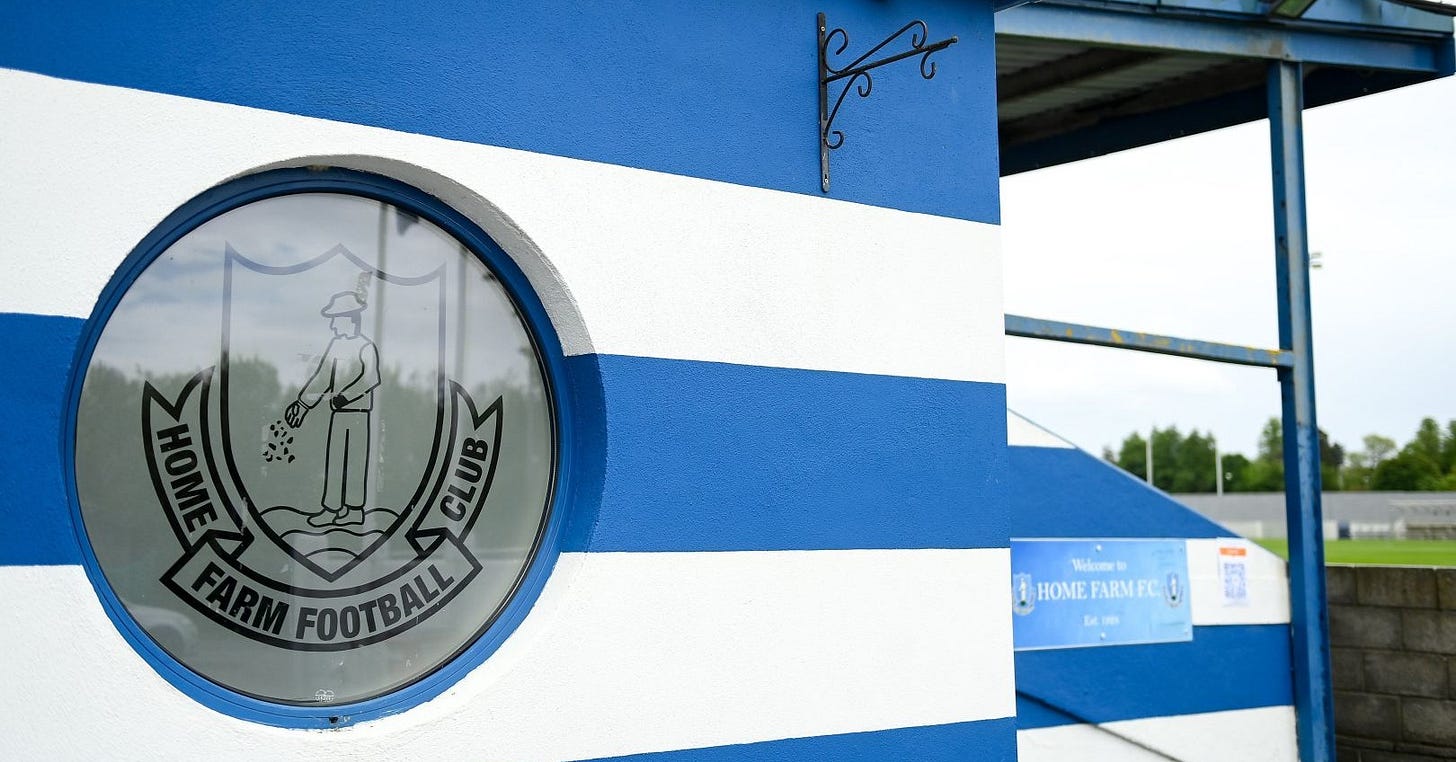
There is one thing worth being clear about here. Home Farm are not back in the League of Ireland.
The FAI National League sits below the Premier and First Divisions as the highest level of the grassroots game. Fifteen clubs are split across three groups this season, with the three group winners and best runner-up progressing to the semi-finals. There is no promotion in 2026, so even winning the whole competition would not put Home Farm into the First Division next year.
From the 2027 National League season, that changes. The champion can face the bottom club in the First Division in a promotion-relegation play-off, provided the National League side meets the required licensing standards. Win it and a place in the 2028 First Division is there.
That is what makes this version of Home Farm different.
For the first time since their League of Ireland days ended, there is a route back that can be earned rather than hoped for.
It will take much more than a good September. League of Ireland football means bigger costs, licensing requirements, facilities and a very different weekly operation. A 6-1 win in Galway is the enjoyable bit. Building a club capable of surviving once it gets there is considerably harder.
Home Farm have time to work that out.
For now, seven points and 10 goals from three away games is enough to make people look again.
For years, the Home Farm story was about the players who started in Whitehall before leaving to make their name somewhere else.
Maybe this time the club gets to go somewhere too.
If this one landed, the newsletter’s where the rest of it lives — two or three pieces a week, no noise.
Subscribe