
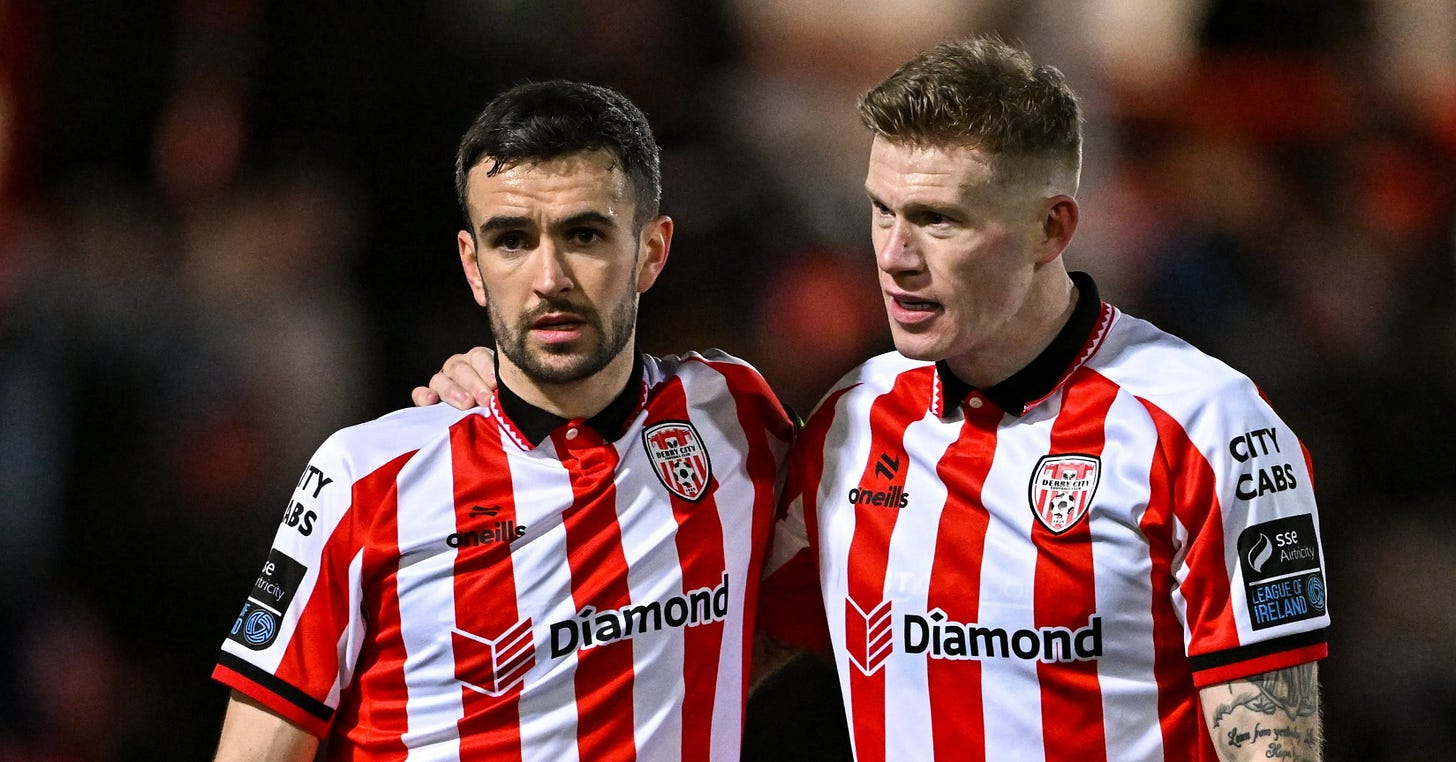
For decades, football coverage on BBC Northern Ireland followed a familiar script. Irish League football, Northern Ireland internationals and the stories that naturally sat within the broadcaster’s traditional audience dominated the schedule. The League of Ireland largely existed outside that ecosystem. Supporters in Belfast, Derry and beyond could watch Premier League football, Champions League football and domestic football from Northern Ireland through mainstream broadcasters, but following the League of Ireland usually required a deliberate choice. It was something supporters sought out rather than something that appeared naturally in front of them.
That is why the recent announcement that BBC Sport NI will broadcast Derry City’s remaining eight home league fixtures on BBC iPlayer across the United Kingdom is more interesting than it first appears. The obvious explanation is that Derry City are uniquely positioned. They are a League of Ireland club based in Northern Ireland, already familiar to BBC audiences through decades of coverage from BBC Radio Foyle. Yet that only explains why Derry were involved. It does not explain why BBC Northern Ireland wanted a League of Ireland deal in the first place. Broadcasters do not acquire sports rights because they like the idea of them. They acquire rights because they believe there is an audience worth serving. The real story, therefore, is not about Derry City. It is about what the BBC’s interest says regarding the League of Ireland itself.
I try to explain football properly. The bits that don’t always get talked about.

If you think it’s worth it, you can support it here.
A League Growing Beyond Expectations
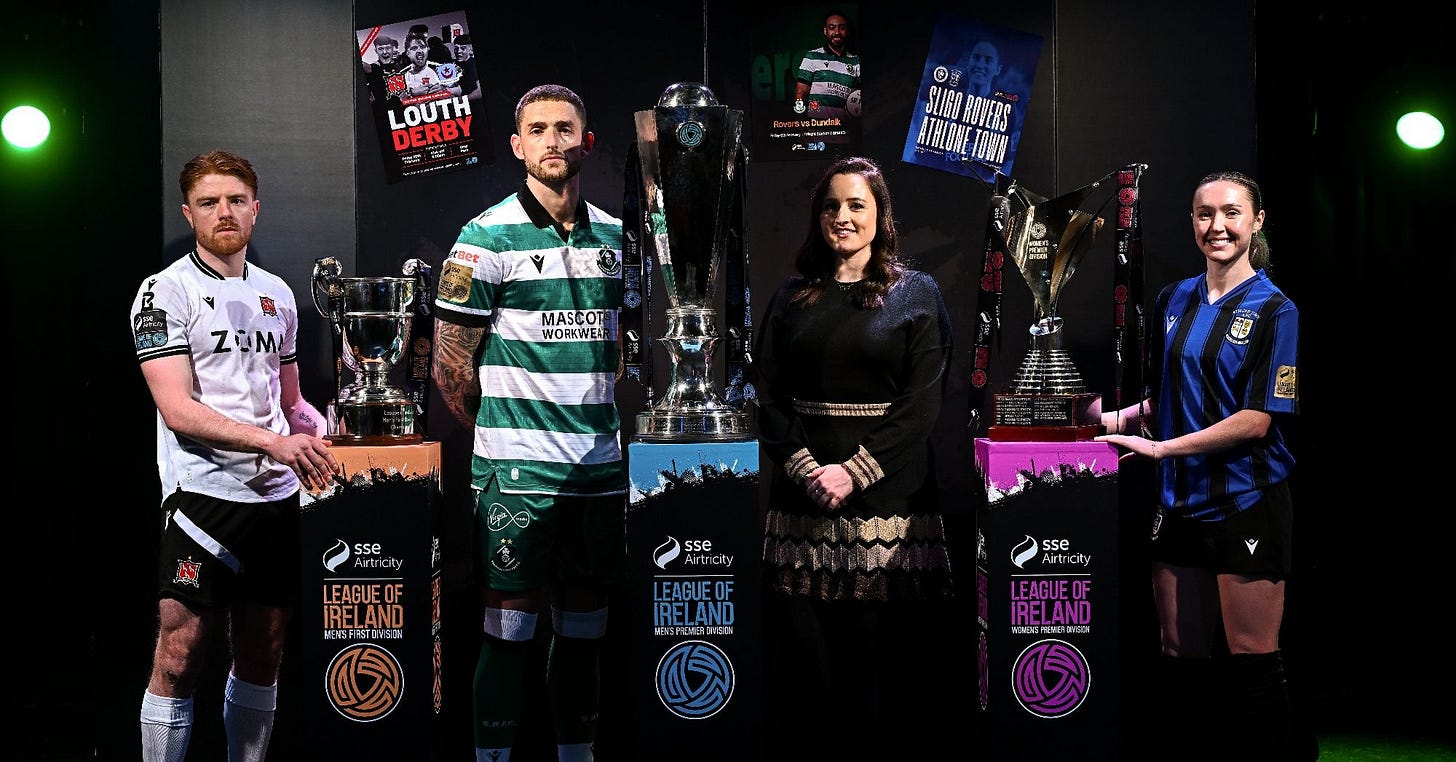
For much of the last two decades, discussions around the League of Ireland often revolved around survival. Clubs battled financial uncertainty, infrastructure lagged behind comparable European leagues and attendances frequently fluctuated. While the league continued to produce talented players and passionate football communities, it often struggled to command sustained attention in a sporting landscape dominated by larger competitions. The challenge was rarely authenticity or quality of support. The challenge was visibility.
Recent years have changed that conversation considerably. League of Ireland competitions attracted more than 1.12 million spectators during the 2025 season, representing an increase of almost 12 per cent on the previous year. Premier Division attendances rose again, while several clubs recorded some of the strongest crowd figures in decades. Derry City reflected that wider trend. Average attendances at the Ryan McBride Brandywell increased from 2,875 to 3,474 supporters between 2024 and 2025, a rise of approximately 20 per cent. Across the league, new stands are being built, facilities are improving and clubs are increasingly discussing growth rather than simply sustainability. None of this places the League of Ireland alongside Europe’s elite competitions. That is not the point. What matters is that the trajectory is moving in one direction. Broadcasters are often less interested in where a product currently sits than where it may be heading.
Why Derry Were The Natural Starting Point

Derry City’s involvement should not surprise anybody familiar with football on the island. The club occupies a position that no other League of Ireland side can replicate. It competes in the Republic’s football system while operating from Northern Ireland. Its supporters consume media from both jurisdictions. Its history is intertwined with both football cultures. Few clubs anywhere in Europe exist quite like it.
That unique position has often created complications throughout the club’s history. Today it offers opportunities. BBC Radio Foyle has covered Derry City for generations. The relationship between the broadcaster and the club already exists. The audience already exists. The infrastructure required to tell Derry City’s story already exists. If BBC Northern Ireland wanted to test League of Ireland coverage on a larger platform, Derry represented the logical entry point. Yet even that reality reveals something interesting. The BBC are not introducing Derry City to Northern Ireland. They are introducing League of Ireland football to audiences who may never have engaged with it before. That distinction matters because it shifts the conversation from geography to growth.
Touchline Partners

Retro football shirts and enough football nostalgia to financially ruin any sensible person: Classic Football Shirts
Use our referral link for 10% OFF at checkout.
The Audience Beyond The Brandywell

The most valuable audience in this story may never attend a match at the Brandywell. They may never purchase a Derry City jersey. Some may never have watched a League of Ireland game before. BBC iPlayer currently reaches approximately 15.2 million weekly active accounts and generates around 87 million viewing hours every week. Those figures dwarf even the strongest attendance numbers within Irish football. The significance of the partnership lies in that gap.
Most committed Derry supporters already know where to watch their team. They attend matches, follow the club online, listen to local coverage or subscribe to LOITV. The people who matter most to the long-term success of the deal sit outside those existing habits. They are football supporters in Belfast who have never developed a connection with the League of Ireland. They are members of the Irish diaspora living in Britain. They are curious football fans browsing iPlayer on a Friday evening. Football’s growth rarely happens because large numbers of people suddenly decide to care. It usually happens because barriers to discovery become smaller. The easier a competition becomes to find, the easier it becomes to build new audiences. Visibility often precedes commercial value. Sponsors understand that reality. Broadcasters understand it even more.
A Small Deal That Says Something Bigger

It would be easy to overstate the significance of eight football matches. This agreement will not transform the finances of Irish football. It will not suddenly create millions of new supporters. Nor does it guarantee broader coverage of the League of Ireland in future. Equally, it would be a mistake to dismiss it as insignificant. Football’s biggest changes rarely arrive as revolutions. They tend to begin as experiments. A new audience is tested. A new platform is explored. A new market is examined. Most disappear quietly. Some develop into something much larger.
What makes this agreement noteworthy is what it reveals about perception. For years, the League of Ireland fought for relevance within a crowded football marketplace. Increasingly, that battle appears to be shifting. A major public broadcaster with access to millions of viewers has looked at the competition and concluded that it is worth placing in front of a wider audience. Derry City happen to be the vehicle through which that experiment begins. The more important question is where it leads next. For a league that spent much of its modern history asking people to pay attention, the fact that broadcasters are beginning to bring the league to people may be one of the most significant developments of all.